Barcelona's Summer Rebuild: A Bold Squad Missing a Striker
Barcelona’s summer rebuild has been bold, expensive and, in one crucial area, incomplete.
They have upgraded almost every line of the pitch. The one position they have not truly touched is the one that once defined them: the number nine.
A supercharged squad – with a hole in the middle
The champions of Spain have not stood still. Rodri’s arrival from Manchester City has dropped a Ballon d'Or winner and World Cup‑winning captain into a midfield already stacked with technique and personality. It is a statement signing, the kind that changes the temperature of a dressing room overnight.
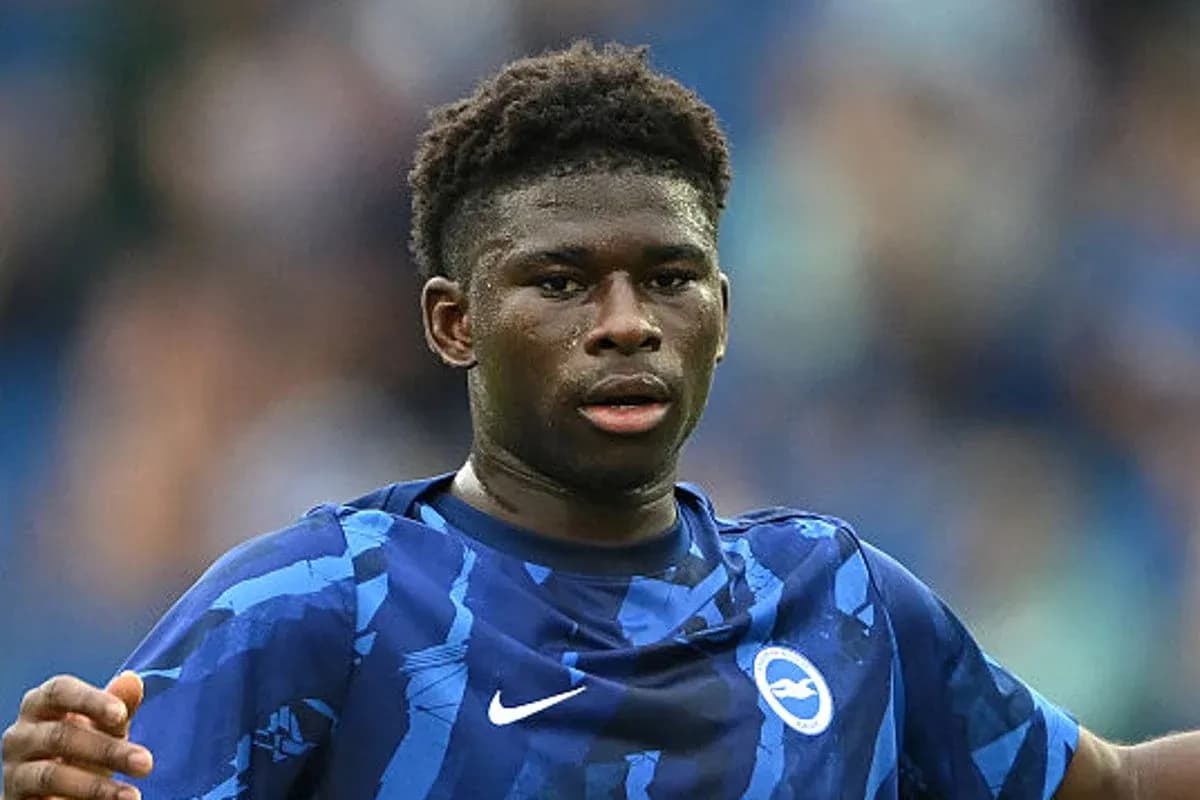
Out wide, Hansi Flick has demanded speed and chaos. He has been given both. Anthony Gordon and Karim Adeyemi bring direct running, aggression and the kind of vertical threat Barcelona have often lacked in recent years. Behind them, 18-year-old Belgian winger Jesse Bisiwu has been brought in as a long-term project, a bet on tomorrow rather than today.
On paper, it looks complete. Until you look at the centre of the attack.
Barcelona head into their opening La Liga fixture away to Elche on Sunday, 23 August, without a recognised senior striker. Unless something dramatic happens before the transfer window closes on 1 September, they may have to live with that reality for the entire campaign.
Life after Lewandowski and Torres
The shift has been forced as much as planned.
Robert Lewandowski, 37, has gone, leaving for Chicago Fire in Major League Soccer when his contract expired at the end of last season. His goals, his presence, his ability to occupy two centre-backs at once – all of it has disappeared in one move.
Ferran Torres has followed him out of the door, joining Paris St‑Germain for about 50m euros (£42.7m). Torres hit 21 goals in 49 appearances last season and often stepped in as an alternative to Lewandowski through the middle. He was not a classic penalty-box striker, but he understood the role and delivered numbers from it.
Both gone. Both hard to replace. And in their absence, Barcelona’s first-team squad currently has no established senior number nine.
The Alvarez dream – and Atletico’s wall
Inside the club, the preferred solution is clear: Julian Alvarez.
The Argentina international, 26, signalled during the World Cup that he would be open to a move away. His blend of tireless pressing, sharp movement and penalty-box instincts makes him an obvious fit for Flick’s high-energy approach.
But wanting Alvarez and getting Alvarez are two very different things.
Atletico Madrid have drawn a thick red line through his name. Interest from Real Madrid only hardened their stance. Chief executive Miguel Angel Gil Marin has been blunt: Atletico will not sell Alvarez, not even for 200m euros (£170.8m). For now, that door is locked.
So Flick must look inward.
Flick’s puzzle: a false nine era?
The German coach has been open about the problem, and about the urgency.
"We know we have to do something," he said this month, while pointing at solutions already in the room. Lamine Yamal can operate as a false nine. Gordon and Adeyemi can both play across the front line. The tools are there – just not in the traditional shape.
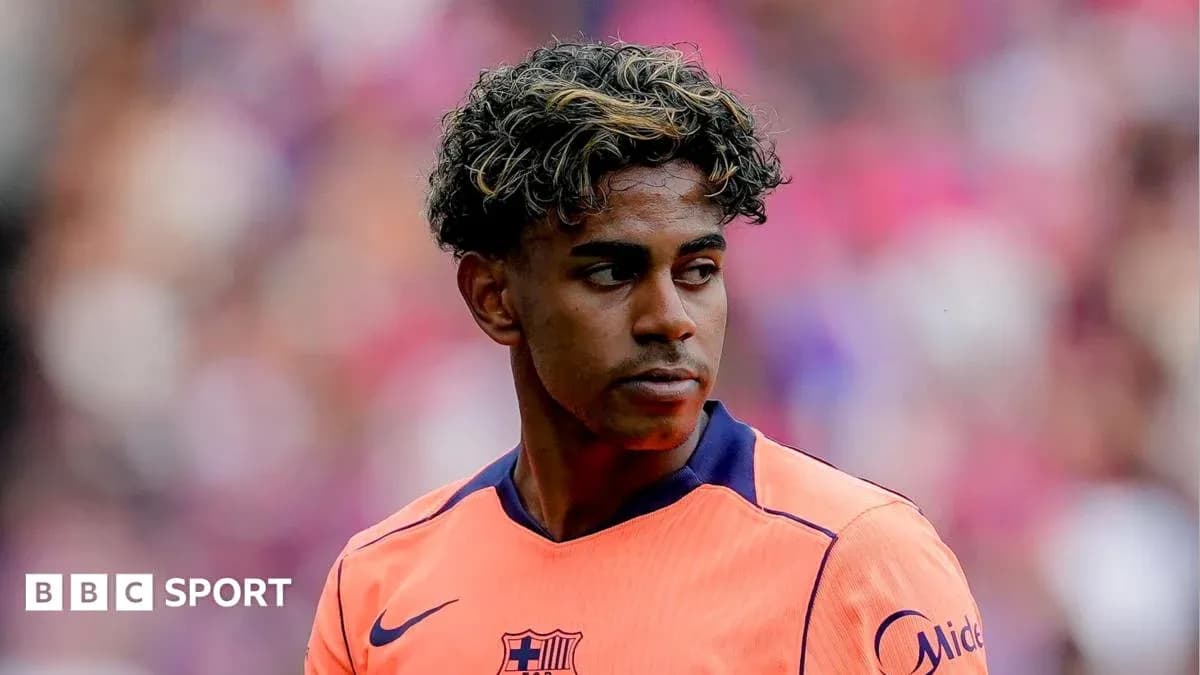
Lamine Yamal is already the focal point of Barcelona’s attack despite his age. He is coming off a season in which he scored 24 goals and lifted the World Cup with Spain. Those numbers would be impressive for a seasoned forward; for a teenager, they are astonishing.
Yet his greatest weapon is not simply his finishing. It is the way he isolates a full-back on the right, squares them up, then slices inside to create something from angles that seem to offer nothing. He bends games to his will from that flank.
Flick knows it. His preference is still to keep Lamine Yamal starting from the right wing, where he can terrorise defences and open space for others rather than carry the burden of playing with his back to goal.
So the false-nine carousel turns to others.
Dani Olmo can drop into that role, knitting midfield and attack, dragging centre-backs into uncomfortable zones. Raphinha has already been used centrally by Flick, a wide forward repurposed as a central attacker. Fermin Lopez is another candidate in advanced positions and has made it clear he is comfortable operating as a false nine.
Gordon and Adeyemi, meanwhile, guarantee pace and direct running. They will stretch teams, drag defences backwards and sideways, and open channels for late runners. What they are not, though, is a pair of conventional number nines.
A fluid front line – or a necessary gamble?
One option sits on the tactics board: abandon the idea of a fixed striker altogether.
Barcelona could lean fully into a fluid forward line, with constant rotation instead of a single reference point between opposition centre-backs. Lamine Yamal drifting inside, Olmo arriving late, Gordon and Adeyemi swapping flanks and channels, Raphinha ghosting into central pockets.
That kind of movement can be a nightmare to defend. Centre-backs lose their duels. Holding midfielders get pulled into the wrong spaces. Full-backs are left wondering who to track and when.
It could be exhilarating. It could also be exhausting over a 50-game season, and unforgiving when chances need to be finished under pressure in tight matches away from home.
Inside the club, there is no doubt about the ideal scenario. Barcelona still want a specialised striker, someone who lives in the box, pins defenders and turns half-chances into goals. Someone who fits the profile and the wage bill.
For now, Flick walks into Elche with a supercharged squad, a reshaped attack – and a question mark right down the middle of it.