Barcelona Dominates Rayo Vallecano 5–2 in La Liga Showdown
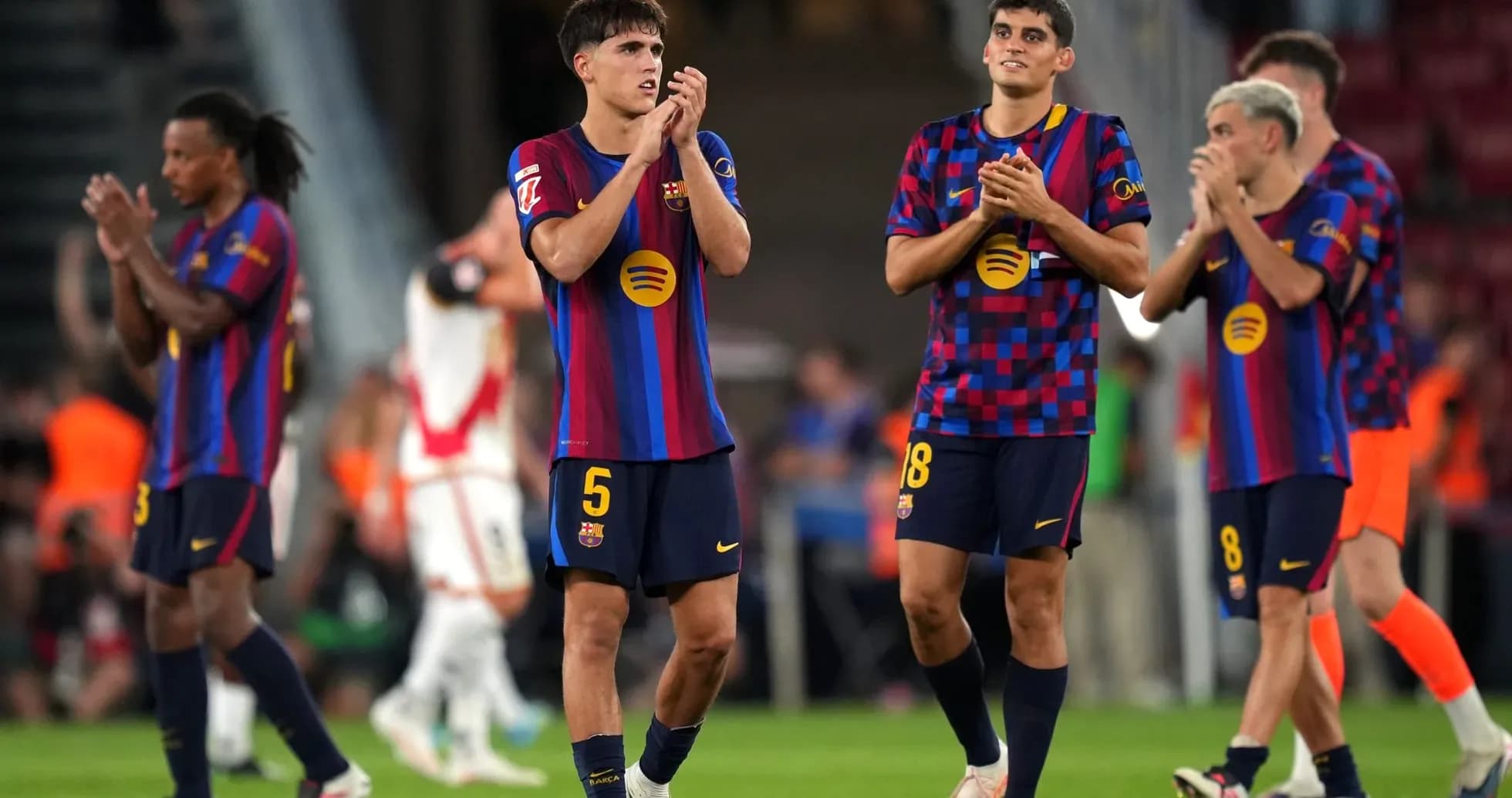
The night at Camp Nou ended with the kind of scoreline that feels less like a league fixture and more like a statement. Barcelona 5–2 Rayo Vallecano, under the lights in La Liga’s Regular Season - 3, was not just three points for the league leaders; it was a live demonstration of a squad built to overwhelm, even while patched together by absences, against an opponent still searching for defensive balance.
I. The Big Picture – A top side in full stride, a struggler exposed
Following this result, Barcelona sit top of La Liga with 9 points from 3 matches, a perfect record of three wins from three. Overall this campaign they have scored 12 goals and conceded 2, giving them a goal difference of +10. At home, they have been especially ruthless: 2 wins from 2, with 7 goals scored and 2 conceded, an average of 3.5 goals for and 1.0 against per home game.
Rayo Vallecano leave Barcelona’s city with the table telling a harsher truth. They are 18th with 1 point from 3 matches, still winless with a goal difference of -4 (4 scored, 8 conceded overall). On their travels, the numbers are stark: 2 away games, 2 defeats, 3 goals scored but 7 conceded, an away average of 1.5 goals for and 3.5 against. Their biggest defeat on their travels so far is precisely this 5–2 scoreline.
Both sides lined up in a 4-2-3-1, but the similarity ended on the tactics board. Barcelona’s structure, under Hansi Flick, looked like a high-pressing, vertical machine. Rayo, under Benat San Jose, resembled a side trying to survive the storm, with just enough attacking spark to threaten but nowhere near enough protection against a top-tier attack.
II. Tactical Voids – Absences and what they forced
The team sheets revealed a Barcelona missing several core midfield reference points. Gavi and F. de Jong were both out with knee injuries, while R. Bardghji was also sidelined with a knee problem. D. Livakovic was listed as inactive, and M. Casado was omitted by coach’s decision. Flick responded by leaning on youth and versatility: M. Bernal and Pedri formed the double pivot, with Lamine Yamal, D. Olmo, and A. Gordon supporting Raphinha as the lone forward.
The absences nudged Barcelona toward a more fluid, high-technical middle rather than a physically dominant one. Pedri became the tempo-setter, Bernal the balancing piece, and the wide “tens” – Lamine Yamal and Gordon – stretched Rayo’s back four relentlessly. That structure only works if the full-backs are secure and progressive, and X. Espart, starting again at left-back, delivered both.
Rayo’s list of missing players was equally significant. A. Batalla, M. Kumbulla, Luiz Felipe, and I. Palazon were all unavailable through injury. The loss of Kumbulla and Luiz Felipe stripped depth and aerial presence from central defence, while Palazon’s absence removed a key creative and transitional outlet. It forced Rayo to lean heavily on U. Lopez and A. Garcia between the lines, with S. Camello asked to both link and finish.
Disciplinary patterns from the season so far also framed the contest. Barcelona have been clean in terms of red cards and have only one yellow this campaign, shown between 16–30 minutes – a sign of control rather than chaos. Rayo, by contrast, tend to get dragged into scrappy spells: 3 yellow cards between 61–75 minutes (50.00% of their total yellows), 2 more between 76–90 (33.33%), and another in stoppage time (16.67%). It paints the picture of a side that tires, chases, and fouls late – exactly the window when Barcelona’s attacking wave usually crests.
III. Key Matchups – Hunter vs Shield, and the engine rooms
The headline duel was always going to be Raphinha against Rayo’s defensive block. Heading into this game, Raphinha was La Liga’s top-rated attacker, with 5 goals and 1 assist in 3 appearances, from just 8 shots (7 on target). His penalty record this season is flawless: 1 taken, 1 scored, 0 missed. In a system that funnels transitions toward his left-footed threat, he becomes both finisher and creator, with 9 key passes and a passing accuracy of 90.
Rayo’s “shield” was an improvised back line: F. Lejeune and P. Ciss in central defence, flanked by I. Balliu and J. Vertrouwd. Without their injured centre-backs, the unit was always likely to struggle against Barcelona’s layered attack. The season’s numbers underline it: overall, Rayo have conceded 8 goals in 3 matches, with their worst damage coming on their travels, where they have allowed 7 in just 2 games. That fragility was ruthlessly targeted by Raphinha’s movement into the right half-space and Gordon’s diagonal runs from the left.
On the other side, the “hunter” for Rayo was S. Camello. With 3 goals in 3 appearances, he has been their most reliable route to goal, supported by A. Garcia, who has 1 goal and 1 assist this season and works tirelessly in wide channels. Their challenge was to exploit any looseness in Barcelona’s back four, particularly with a young pairing of P. Cubarsi and X. Espart on the left side. Yet Barcelona’s overall defensive record – just 2 goals conceded in 3 matches, with 2 clean sheets overall this campaign – suggested a unit that bends rarely and breaks even less.
The engine-room battle was where the game’s rhythm was decided. For Barcelona, Pedri and Bernal orchestrated from deep, while Lamine Yamal floated as a high creative hub. Lamine’s league numbers before this match – 2 goals, 13 key passes, 18 dribble attempts with 11 successes – show a player who destabilises structures more than he simply “plays a position.” Every time he received between the lines, Rayo’s double pivot of O. Valentin and G. Bouare was forced to collapse inward, opening corridors for Gordon and Raphinha.
Defensively, X. Espart was a quiet but decisive figure. Over the season he has produced 2 assists from left-back, with 156 passes at 86% accuracy, 8 tackles, and 5 interceptions. That blend of progression and defensive reliability allowed Barcelona to maintain a high line without constantly being exposed to A. Garcia’s pace on the counter.
IV. Statistical Prognosis – Why this game tilted so heavily
From a macro view, this match unfolded exactly along the season’s statistical fault lines. Barcelona, with 4.0 goals scored on average overall and only 0.7 conceded per game, are built to dominate both territory and scoreboard, especially at Camp Nou. Rayo, averaging 1.3 goals scored overall but conceding 2.7, simply do not yet have the defensive solidity to withstand 90 minutes against a side with this much attacking form.
Barcelona’s penalty profile added another layer of inevitability. Overall this campaign they have earned and converted 1 penalty, with no misses – meaning any clumsy challenge in the box against Raphinha or Lamine Yamal would be punished with near-certainty. Rayo, by contrast, have had no penalties at all this season, neither for nor against, limiting their ability to manufacture high-value chances when open play stalls.
The disciplinary trend completed the picture. As Rayo typically accumulate their yellows from 61 minutes onward, their structure tends to fray just as opponents push for a decisive spell. Against a Barcelona side that can introduce impact players like Fermín and K. Adeyemi from the bench – both already on the season’s scoring and assisting charts – that late-game looseness becomes fatal.
In the end, the 5–2 scoreline was less a surprise than a confirmation. Barcelona’s squad, even without Gavi and F. de Jong, is layered with creators and finishers: Raphinha as the ruthless spearhead, Lamine Yamal as the chaos-bringer, Gordon as the subtle supplier, and Espart as the modern full-back glue. Rayo have individual threats in S. Camello and A. Garcia, but until their injured defenders return and their away defensive numbers improve, nights like this at Camp Nou will remain less a contest and more a test of damage limitation.