Bafana Bafana's Resilience in Atlanta: A Draw Against Czechia
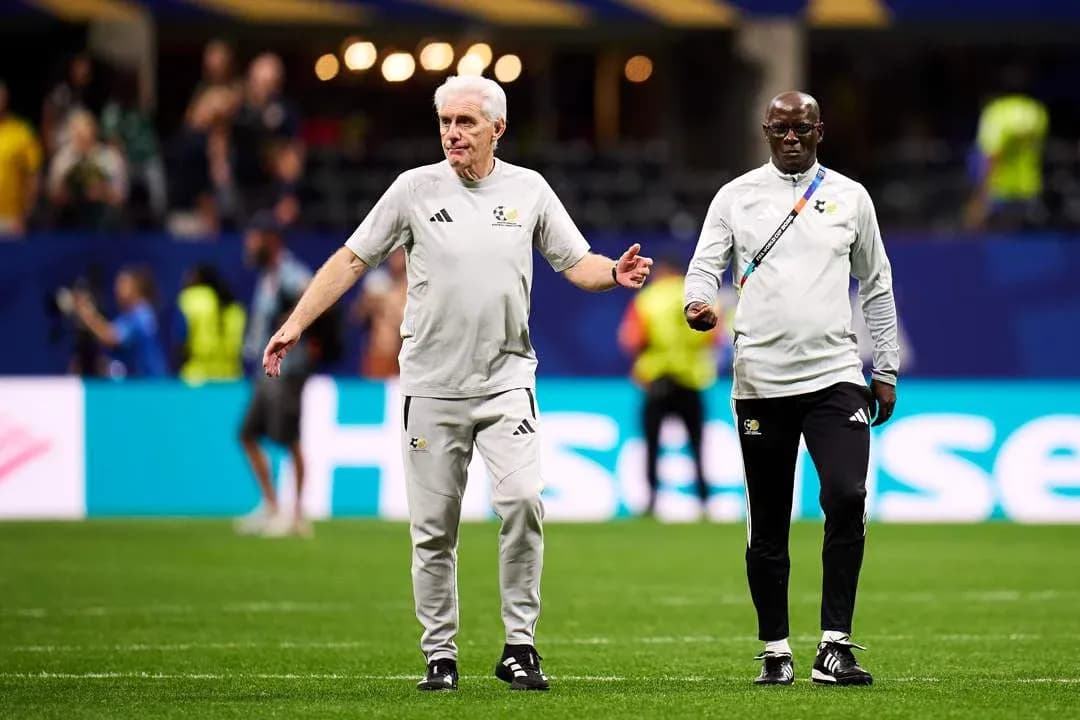
Hugo Broos walked out of Atlanta Stadium with a point, a pulse in South Africa’s World Cup campaign – and a few choice words for the gleaming arena that hosted it.
Bafana Bafana’s 1-1 draw with Czechia kept their knockout hopes alive, but the Belgian coach made it clear he felt the football had been played in the wrong kind of theatre.
“This is not a football stadium,” he said bluntly after the game. “It’s a nice stadium, fantastic stadium, everything you want. But only the grass is football. All the rest is not.”
A fight under a closed roof
Under the closed roof of the NFL-style arena, home to the Atlanta Falcons and Atlanta United, Bafana were forced to scrap from almost the first whistle.
Czechia struck early. In the sixth minute, Michal Sadilek pounced, his finish handing the Europeans control and threatening to drag South Africa towards another bruising defeat on the global stage.
The goal rattled them, but it didn’t break them.
Broos’ side pushed back. They pressed high, chased lost causes, and kept asking questions of a Czech defence that had looked comfortable after the opener. The clock ticked, the noise inside the covered bowl rose and fell, and still Bafana chased the game.
The pressure finally told seven minutes from time.
Pavel Sulc handled inside the area, the referee pointed to the spot, and Teboho Mokoena stepped up with a calm that cut through the tension. One stride, one clean strike, and South Africa were level, their World Cup dream dragged back from the brink.
The penalty did more than secure a draw. It injected oxygen into a Group A campaign that had started with a 2-0 defeat to co-hosts Mexico at the iconic Estadio Azteca and looked in danger of suffocating.
Azteca vs Atlanta
For Broos, the contrast between that night in Mexico City and this one in Atlanta could not have been sharper.
“It’s a covered stadium. I like to play in an open stadium. I don’t feel really the atmosphere in such a stadium,” he said. “When you compare it with Azteca, for example, that is a football stadium!”
He acknowledged the spectacle for supporters – the sightlines, the comfort, the technology. “These stadiums are fantastic stadiums for the crowd. I think they see everything in that stadium. There are no places that are covered or whatever. But, again, I rather like a real football stadium.”
For a 74-year-old steeped in old-school European grounds and open skies, the noise trapped under a retractable roof and the polished, multi-purpose design clearly jarred with his idea of what a World Cup arena should feel like.
Rhythm broken, resilience found
His irritation did not end with the architecture.
Inside a climate-controlled stadium, hydration breaks still cut into the contest, and Broos did not hide his frustration at what he saw as needless interruptions.
“I think it’s very, very useful when it’s hot,” he said. “But in other cases, the rhythm of the game is lost.
“When at that moment you are the best team and you dominate, suddenly your domination is blocked for five minutes or I don’t know how long... in that stadium, we don’t need to drink after 20 minutes.”
The stop-start nature of the game might have unsettled a less experienced side. Instead, Bafana held their nerve. They bent but did not buckle, stayed in the contest, and eventually forced the mistake that brought the penalty and the point.
Broos liked what he saw in those moments.
“If we can make another performance like today, I think we have a chance to go in the second round,” he said. “I’m very proud of my team, and this is the real Bafana Bafana.”
History still on the line
The draw leaves South Africa exactly where a coach wants to be after two group matches: in control of their own fate.
Their final Group A fixture, against South Korea at Estadio Monterrey in Mexico on Thursday, 25 June (03:00 SA time), now carries the weight of history. The Taegeuk Warriors arrive wounded after a narrow 1-0 defeat to Mexico, their own campaign finely balanced, their own ambitions on the line.
For Bafana, the stakes are stark.
This is only their fourth World Cup appearance. They have never escaped the group stage. A win in Monterrey would give them a real shot at the Round of 32, either as a top-two finisher or as one of the best third-placed teams. It would also mark a rare away victory on the sport’s biggest stage.
The venue will be different. The air open, the backdrop more traditional, the setting closer to the kind of football cathedral Broos craves.
The question now is simple: having found their fight under a closed roof in Atlanta, can this “real Bafana Bafana” walk into Monterrey and finally kick down a door that has always stayed shut?