Athletic Club's Dominant 3–0 Victory Over Atletico Madrid
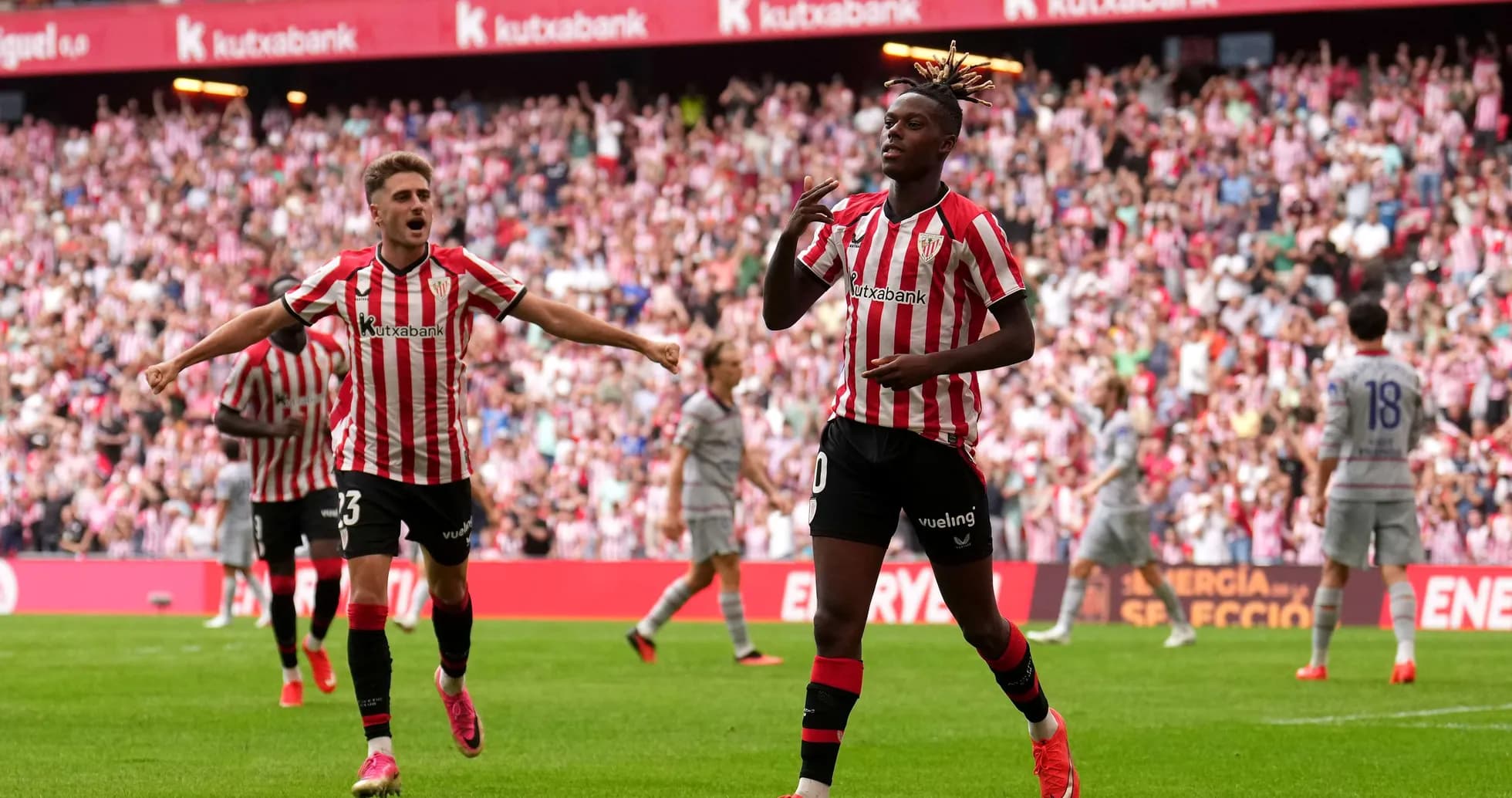
San Mamés had the final word. Under the Bilbao drizzle and the noise of a restless cathedral, Athletic Club did more than beat Atletico Madrid 3–0; they bent the early-season narrative of La Liga in their favour.
I. The Big Picture – A statement win in Round 4
This was Round 4 of the 2026 La Liga season, a meeting between two sides already showing their seasonal DNA. Athletic came in with a volatile profile: two wins and two defeats in total, six points, and a goal difference of +1 from six scored and five conceded overall. At home they had been entertaining but fragile, with four goals for and three against across two league matches, an average of 2.0 goals scored and 1.5 conceded at San Mamés.
Atletico arrived as the more stable operator: seventh in the table with seven points and the label of “ECL Playoffs” hanging over their current sixth-place standing in the separate snapshot, two wins, one draw, one defeat overall, and a total goal difference of +1 (seven scored, six conceded). On their travels, they had been efficient but imperfect: three away goals for and four against from two matches, averaging 1.5 scored and 2.0 conceded away from home.
On this afternoon, though, all those small numerical edges were swallowed by the intensity of Athletic’s 4-2-3-1 and the collapse of Atletico’s 4-4-2 structure.
II. Tactical Voids – Absences and discipline
Both coaches had to navigate important absences. For Ernesto Terzić, the missing spine at the back was significant: D. Vivian out with a hamstring injury, U. Egiluz sidelined by a knee issue, and squad options like P. Canales and N. Serrano unavailable. A. Djalo was also out by coach’s decision. Yet the defensive line of Jesú s Areso, Yeray, Aymeric Laporte and Yuri held firm, with Unai Simón behind them, and turned what could have been a structural weakness into a platform.
On the Atletico side, Diego Simeone was without A. Sorloth through muscle injury and O. Vargas by coach’s decision. That forced a more fluid attacking interpretation of the 4-4-2, with Lee Kang-In and Álex Baena both listed as forwards but operating as hybrid creators rather than pure strikers. Giuliano Simeone, a key worker in their pressing game this season, started from midfield rather than as an out-and-out nine.
Discipline had been a pre-match storyline. Athletic’s season card map showed a pronounced late-game surge in yellow cards between 61–75 minutes (42.86% of their yellows), and a red card already in the opening 0–15-minute window – a reminder of Yuri’s combustible edge, underlined by his red card in league play. Atletico, for their part, had a red in the 76–90-minute band and a spread of yellows particularly from 31–60 minutes and into added time (25.00% in 31–45, 25.00% in 46–60, and another 25.00% between 91–105).
This backdrop framed a contest where emotional control would matter as much as pressing triggers. On the day, it was Athletic who channelled their aggression into coherent, collective pressure, while Atletico never quite found the balance between bite and composure.
III. Key Matchups – Hunter vs Shield, Engine Room battles
The most intriguing attacking subplot belonged to Robert Navarro. Already with two league goals and a 7.47 average rating heading into this game, he is emerging as Athletic’s high-impact second line runner. From the right half-space of the 4-2-3-1, Navarro combined with Oihan Sancet and Nico Williams to overload Atletico’s left side, where Álex Grimaldo is more natural as an attacking full-back than a pure defender.
Behind them, the double pivot of Ruíz de Galarreta and Beñat Gerenabarrena quietly dictated the rhythm. Galarreta’s positioning in front of Yeray and Laporte closed the central lane that Lee Kang-In usually exploits so well. With Athletic averaging 1.5 goals for and 1.3 against overall, this balance between risk and security is their defining trait: they accept space in wide areas in order to lock the centre.
For Atletico, the “hunter vs shield” duel centred on Álex Baena. He came into the match as one of La Liga’s most productive attackers: three goals and one assist, six shots with four on target, and ten key passes already this season. But stationed as a forward in the 4-4-2, he was forced to receive with his back to goal more often, running into the combined resistance of Laporte stepping out and Galarreta screening. The result: Atletico’s most dangerous creator was dragged away from his preferred zones between the lines.
In the engine room, M. Hjulmand and Pablo Barrios were asked to wrestle control from Sancet’s drifting playmaker role. They struggled to compress the space between their midfield and back four, especially once Athletic’s full-backs advanced. Areso and Yuri pushed high simultaneously at times, trusting Laporte and Yeray’s covering speed and Simón’s sweeping, and that boldness tilted the territorial battle.
Out wide, Nico Williams and Iñaki Williams provided a constant vertical threat. Iñaki, already with two league assists and five key passes, again played as a facilitator rather than a pure finisher, dragging centre-backs into the channels and opening corridors for late runs from Sancet and Navarro. Atletico’s back line, already conceding an average of 2.0 goals away from home heading into this game, could not live with the repeated sprints in behind.
IV. Statistical Prognosis – What this 3–0 really says
Following this result, the numbers behind the story harden. Athletic’s attacking trend at San Mamés – four home goals from two matches before kick-off, with their biggest home win already a 3–0 – is now reinforced by another emphatic scoreline. Their clean sheet tally, already two overall before this game, underlines that when their press is synchronised, the back four can be far more secure than their raw averages suggest.
Atletico, meanwhile, see their away defensive concerns magnified. Conceding four goals on their travels before arriving in Bilbao and now shipping three more fits the pattern of a side that is still calibrating its back line and midfield shield. The reliance on Baena and Lee Kang-In for both chance creation and final-third incision makes them spectacular when transitions break their way, but vulnerable when opponents, like Athletic here, force them into static, positional attacks.
In xG terms – even without the explicit model values – all signs point to Athletic having generated the better quality of chances: sustained pressure, multiple runners into the box, and repeated entries into the half-spaces against a defence that has been conceding 1.5 goals per match overall. Atletico’s offensive profile, 1.8 goals scored per game heading into this fixture, was smothered by Athletic’s compactness and the refusal of Laporte and Yeray to be dragged wide.
The tactical verdict is clear. Athletic’s 4-2-3-1, powered by the Williams brothers’ verticality and Navarro’s form, looks built to punch above its current ninth-place standing. Atletico’s 4-4-2, rich in technical quality but still searching for its defensive ceiling away from home, will need recalibration if Simeone’s side are to turn promising attacking metrics into the kind of solidity that once defined them. At San Mamés, the numbers and the narrative aligned: the Basque side were sharper, braver, and, crucially, more balanced across all lines.