Arsenal: Rebuilt and Ready to Challenge for the League
Arsenal finished last season with a medal haul that felt strangely light for a team of their stature. The Fifa Champions Cup barely scratched the itch after the high of that 2025 Champions League triumph. It also disguised a harder truth: this squad had reached the end of a cycle and needed ripping up.
This summer, Arsenal did exactly that.
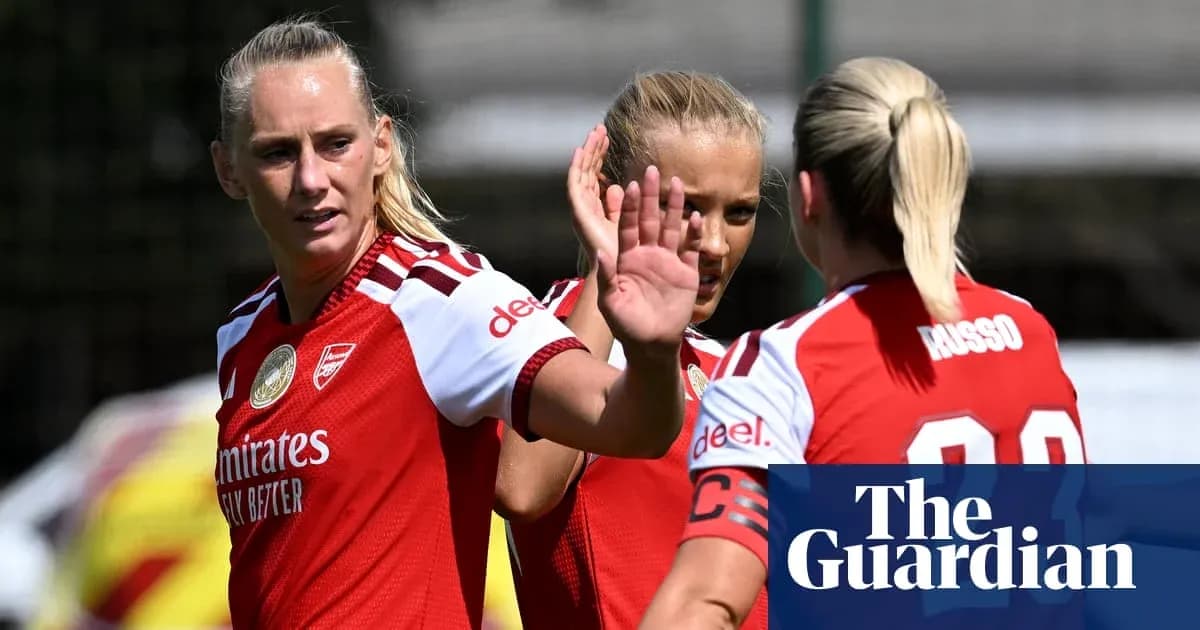
Eleven players have gone, among them two modern greats in Beth Mead and Katie McCabe. Seven have come in. The overhaul is not subtle. In Ona Batlle, Georgia Stanway, Géraldine Reuteler and Selina Cerci, Renée Slegers has been handed what every ambitious coach craves: proven, top-level quality, but with younger legs and a fresher ceiling.
The calculation is brutal. Letting Mead join Manchester City and McCabe head to Chelsea could yet sting. Both are capable of swinging a title race with a single moment. But for the first time since she walked into the job, Slegers has had a full pre-season and a squad increasingly built in her image. No qualifiers, no major summer tournament, no staggered returns. After two campaigns that began with a stumble – four draws and a defeat in their first nine WSL games last year – Arsenal can’t hide behind rust or fatigue this time.
They start with clarity and with pressure. The club’s own technical director, Jodie Taylor, has stripped away any remaining veneer of caution. “I’ll flat out say it: we want to win the league and want to take that next step.” Seven years without a title is an eternity for a club that still sees itself as the standard-bearer.
A tighter race, a narrower margin
The landscape around them has shifted. Manchester City are back in the Champions League and spending like a team intent on staying there. Others across the WSL have recruited smartly rather than loudly. The title race, already knife-edge last season, could compress even further.
Arsenal know exactly where they fell short. Opta’s expected points model had them as the best team in the division in 2025‑26. They lost only once. That should win you a title. It didn’t, because they drew six times while City dropped points in just one draw.
The data bites harder when you drill down. Arsenal’s underlying numbers suggest they comfortably did enough to win three of those stalemates. Only one, against Chelsea, tilts the other way and hints they might have been fortunate to escape with a point. The head-to-head with City ended one win apiece. In a race that tight, those wasteful afternoons against everyone else proved fatal.
That is the margin Slegers has to erase: not a gulf in quality, but the inability to turn dominance into ruthlessness.
Money, momentum and dependence
Off the pitch, Arsenal look like a club riding a wave they’re desperate to keep going. The latest accounts, up to May 2025, show revenue climbing by £6.5m to £21.5m. The Emirates Stadium has become a genuine force multiplier. Eight games there delivered an average crowd of 29,833 and almost £6m in matchday income.
Those numbers are already out of date. Last season’s WSL home fixtures produced an average attendance north of 34,000 across 11 games. When that filters into the next set of accounts, Arsenal’s growth curve will look even steeper.
Broadcast revenue has surged past £2m, more than double the £956,000 figure from 2024, boosted significantly by that Champions League success. Commercial income has leapt from £649,000 to £1.77m. The women’s side are no longer a cost centre quietly tucked away in the books; they are a visible, growing business.
Yet the dependence remains. Group income from the parent club has risen from £9.3m to £11.85m and still represents more than half of overall revenue. Arsenal are leading the league in attendances and momentum, but they are not yet standing fully on their own financial feet.
Slegers’ team, at last
This is Slegers’ moment. The 37-year-old stepped in as interim after Jonas Eidevall’s exit and steadied a listing ship. She then navigated them to a second-place finish and Champions League league-phase qualification. Now comes the harder part: evolution.
She inherited an established, decorated dressing room. This summer’s churn changes the dynamic. With so many departures and a cluster of high-level arrivals, Slegers can now imprint her style without tiptoeing around legacy hierarchies. The expectation is clear. Arsenal’s writers’ poll has them down for another second-place finish. Inside the club, anything short of first will feel like underachievement.
Stanway’s steel at the heart of it
Of all the new faces, one name jumps out. Georgia Stanway arrives as a two-time European champion with England and as the sort of midfielder Arsenal have lacked for years. She knows many of her new teammates from international duty. More importantly, she knows exactly who she is as a player.
Stanway has described herself as “ruthless and robust”. The labels fit. She tackles, she harries, she disrupts, and she does it with a relentlessness that can tilt the emotional temperature of a game. Arsenal’s football has often been admired for its elegance. Stanway offers edge. At 27, she is in her prime and slots straight into the spine of a team that has sometimes looked too polite in the biggest domestic battles.
Add Batlle’s energy on the flank, Reuteler’s intelligence between the lines and Cerci’s threat in the final third, and Arsenal’s refresh looks more like a rearmament.
Fine margins, fine-tuned
The numbers from last season will have been pored over at London Colney. Leading the league on expected points, losing just once, yet still finishing behind City – it all points to a side that dominated structure but lacked the killer detail.
That is where the summer work has been aimed. Turn three of those draws into wins and Arsenal are champions. The club know it. The players know it. The recruitment screams it.
On top of that, they welcome back two young talents whose seasons were wrecked before they had truly begun. Michelle Agyemang, 20, came off a phenomenal Euro 2025 campaign, and 19-year-old Katie Reid started the domestic season superbly. Then came the same cruel twist: anterior cruciate ligament injuries and almost a year on the sidelines.
Their returns will be cautious, minutes carefully managed, expectations tempered. But both left the stage looking ready to explode. If they can rediscover that level, Arsenal’s depth suddenly looks far more menacing.
Cooking something new
Inside the dressing room, there is a sense of construction rather than reconstruction. Lotte Wubben-Moy captured it in a line that has stuck: “It’s like you’re cooking the most beautiful recipe and then you add the final small ingredients that make the marginal difference, that elevate, and you create something that’s beautiful and that you can relish and enjoy. That’s what we’re in the process of.”
It is a neat summary of where Arsenal stand. The base is there: Champions League pedigree, elite facilities, a swelling fanbase, a manager who has already shown she can organise and inspire. The club believe they have now added the “final small ingredients”.
The stadium dilemma
One problem refuses to budge. Arsenal have become the WSL’s attendance powerhouse, accounting for more than 40% of the league’s crowds last season. Every WSL home game and any European knockout ties, assuming they get there, will again be staged at the Emirates.
The issue comes with domestic cups and the Champions League league phase. Those fixtures will remain at Meadow Park. The Emirates is simply too big and too complex to schedule around the men’s team for every date, yet Meadow Park no longer fits the scale of what this side has become. The club are effectively caught between a home that is too vast and one that is too small.
On the pitch, though, there is no such ambiguity. Arsenal have rebuilt, reloaded and said the quiet part out loud. They want the league back. After seven years of waiting and a summer of sweeping change, anything less will feel like a step short of the recipe they insist they are perfecting.