Arsenal Crowned Champions: The Premier League's Competitive Balance
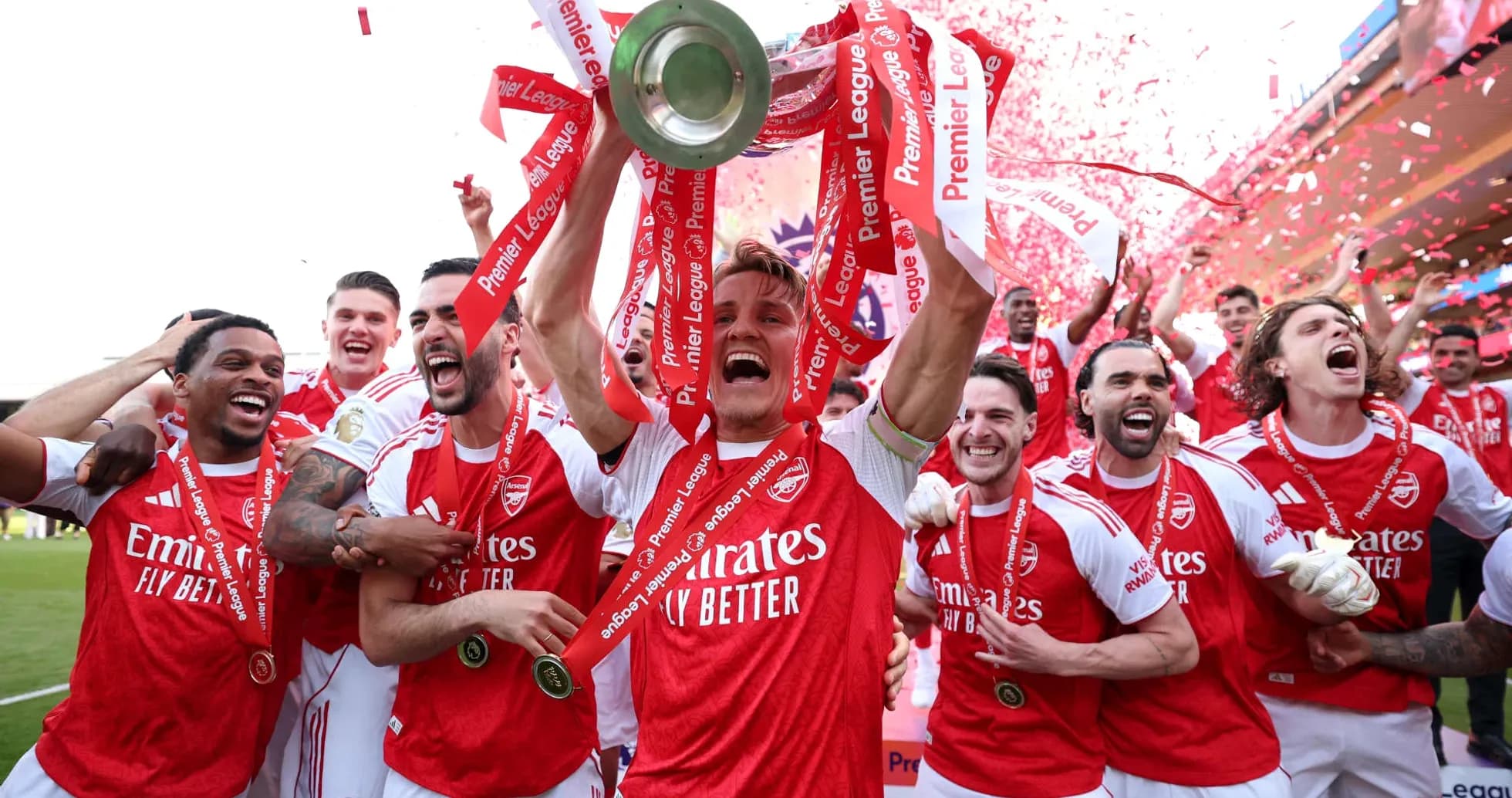
Martin Odegaard hoisted the Premier League trophy into the Selhurst Park sky and, for a moment, English football looked untouchable.
Arsenal, champions again after 22 long years, paraded their 14th league title on a south London afternoon that felt like a coronation not just for a club, but for a system. Three different champions in three seasons — Manchester City in 2023-24, Liverpool in 2024-25, Arsenal now — is the kind of churn most of Europe can only dream about.
Look across the continent and the contrast is brutal. Spain, the next richest league, has been carved up almost exclusively by Barcelona and Real Madrid: 20 titles out of the last 22 between them. Germany? Bayern Munich have taken 13 of the last 14. France? Paris Saint-Germain have collected eight of the last nine.
Only Serie A can look the Premier League in the eye. Juventus, Inter Milan, AC Milan and Napoli have all had their turn with the Scudetto in the last seven years, a rare pocket of variety in an era of super-club dominance.
England, though, has turned competitive balance into an export product. Its clubs are not just fighting each other; they are swarming Europe.
Aston Villa and Crystal Palace claimed the Europa League and Europa Conference League, an English double that was one penalty shootout away from becoming a clean sweep. Only PSG, edging Arsenal on spot-kicks in the Champions League final, stopped the Premier League from owning every major European trophy.
Chelsea still hold FIFA’s Club World Cup. The English game, on the surface, is booming.
It helps when you own the most powerful broadcast machine in the sport. The Premier League’s domestic and overseas TV rights dwarf those of any rival competition. Deloitte’s latest rich list underlined that financial muscle: English sides filled half of the top 30 by revenue, with even AFC Bournemouth, Brentford and Brighton & Hove Albion muscling in on territory once reserved for the traditional giants.
Scratch the gloss, though, and the picture starts to blur.
The league that sells itself as the game’s ultimate destination is watching some of its best English players leave. Harry Kane, the national captain, leads a group increasingly comfortable building careers abroad. Anthony Gordon’s move from Newcastle United to Barcelona last week added another name to the exodus. Six members of England’s squad for the upcoming World Cup now play outside the country.
For years, that kind of interest from Real Madrid, AC Milan or Barcelona was a badge of honour. Now, as Martin Samuel of The Times pointed out, the volume tells a different story. When almost a quarter of the national squad is based overseas, the word “drain” stops feeling melodramatic. The real sting lies in the imbalance: the same calibre of player is not flowing back the other way.
The financial underpinnings look just as uneasy.
Despite their record-breaking revenues, only four Premier League clubs — Newcastle, Villa, Bournemouth and Liverpool — actually turned a profit in the most recent season on record. Everyone else is effectively gambling: on future success, on player trading, on the next TV cycle holding firm.
Below the top flight, the stakes are harsher. Administration has become a grimly familiar word, even for historic institutions. Derby County and Sheffield Wednesday, clubs with generations of support and deep roots in the English game, have both been dragged through financial crisis.
To stay within financial fair play rules, many sides lean on creative accounting. Stadium sale-and-leaseback deals, training ground transactions and other one-off manoeuvres help them tick the regulatory boxes. The rules were designed to stop a handful of super-rich owners — including sovereign wealth funds — from inflating fees and wages to unsustainable levels. Instead, they have helped create a landscape where clubs dance on the edge just to keep pace.
And those big-money backers the league has grown used to? They may not be quite so keen anymore.
Relegation has always been the Premier League’s dark shadow, but this season it felt especially cold. Tottenham Hotspur, one of the six clubs who flirted with the doomed European Super League project in 2021, only just avoided the drop. West Ham United, the division’s eighth-longest serving side and 20th in Deloitte’s Money League, were not so fortunate. They went down.
For American investors raised on closed leagues and guaranteed fixtures, that kind of jeopardy is more than a cultural quirk; it is a business risk. When Liverpool, Manchester United, Palace, Chelsea and Newcastle are, in different ways, open to new investment or outright sale, potential buyers will not just be looking at balance sheets. They will be looking at West Ham’s fall, at Tottenham’s brush with disaster, and asking themselves how quickly a global brand can become a Championship fixture list.
Samuel put it bluntly: those prospective owners will “shiver.” You suspect the Premier League’s executives did the same.
On the pitch, the league has never looked stronger. Off it, the foundations are starting to creak. The question now is whether English football can keep selling the dream without losing control of the reality that pays for it.