Arsenal v Atletico Madrid: Arteta’s Beasts Hunt Champions League History
The Emirates has waited 20 years for a night like this. Arsenal walk out knowing that one game, one performance, separates them from a first men’s Champions League final since 2006. The margin is thin – a 1-1 draw from the first leg in Madrid – but the stage could hardly be bigger.
Mikel Arteta has been careful with his words this week, but not timid. The Arsenal manager has spoken of “beast” mode, of a team ready not just to cope with the occasion but to devour it. This is what the season has been building towards, and he knows it.
“It's difficult to express the desire to live that moment,” he said, thinking of his players and the supporters who have been starved of these nights. He talked of something “amazing” about to happen, of a side that will go from the first minute to “go and get that”.
This is not a club arriving by accident. It is one that has been straining towards this level for years.
Arsenal’s edge – and their burden
The numbers offer Arsenal a quiet confidence. They are unbeaten in eight Champions League games against Spanish opposition, a run bettered only once in the modern era – Chelsea’s 16-game streak between 2006 and 2014. They have also won six of their nine previous two-legged ties in which they drew the first leg away from home.
That matters. It speaks to a group that knows how to handle jeopardy, how to turn a solid away result into a ruthless home performance.
There is more. Atletico Madrid have won only two of their last 13 matches against English clubs and have lost their last four away games against Premier League sides. The Emirates, usually a polished, almost pristine arena, has the chance to become something far more hostile for Diego Simeone’s team.
And yet, the warning signs are bright red.
Atletico’s hard edge and hard history
Atletico are built for nights like this. They have faced English teams in three previous European semi-finals and advanced every time: on away goals against Liverpool in the 2009/10 Europa League, 3-1 on aggregate against Chelsea in the 2013/14 Champions League, and 2-1 overall against Arsenal themselves in the 2017/18 Europa League.
They have won six of their last seven semi-final ties in Europe. When the stakes rise, they usually rise with them.
Even the 1-1 draw in Madrid carries a familiar undertone. Atletico have drawn the first leg at home in a Uefa two-legged tie 10 times and gone through on six of those occasions. They are comfortable in the grind, in the tension, in the tiny margins that decide seasons.
Simeone has spent the build-up trying to drag Arsenal into that world. Complaints about the pitch, about the grass length, about the surroundings – the usual psychological shrapnel from a coach who knows that if the game becomes emotional, ragged, chaotic, his side’s chances grow.
Inside Arsenal, the message has been the opposite: clarity, control, calm. Do not “lose your heads”, as one warning put it. Use the home advantage, don’t get consumed by it.
Odegaard’s rallying cry
If Arteta has set the tone, Martin Odegaard has given it a voice. The captain used his programme notes to speak directly to the supporters, and he did not downplay what is at stake.
“We know exactly what we are playing for tonight,” he wrote. “Everyone is so excited for the chance to do something special for this club.”
He called this “the best part of the season to be involved in”, insisted that it “doesn’t get much bigger” than a Champions League semi-final at home, and urged the crowd to “really go for it”.
Odegaard framed the evening in the language of childhood dreams – the moments footballers “dream about… our whole life” – and then cut to the core: Arsenal know the club has not reached the final for 20 years. That history sits on their shoulders, but it also fuels them.
“We’ve put ourselves in this position through a lot of work all season,” he said. “Now we want to go and make history.”
The line-ups and the fault lines
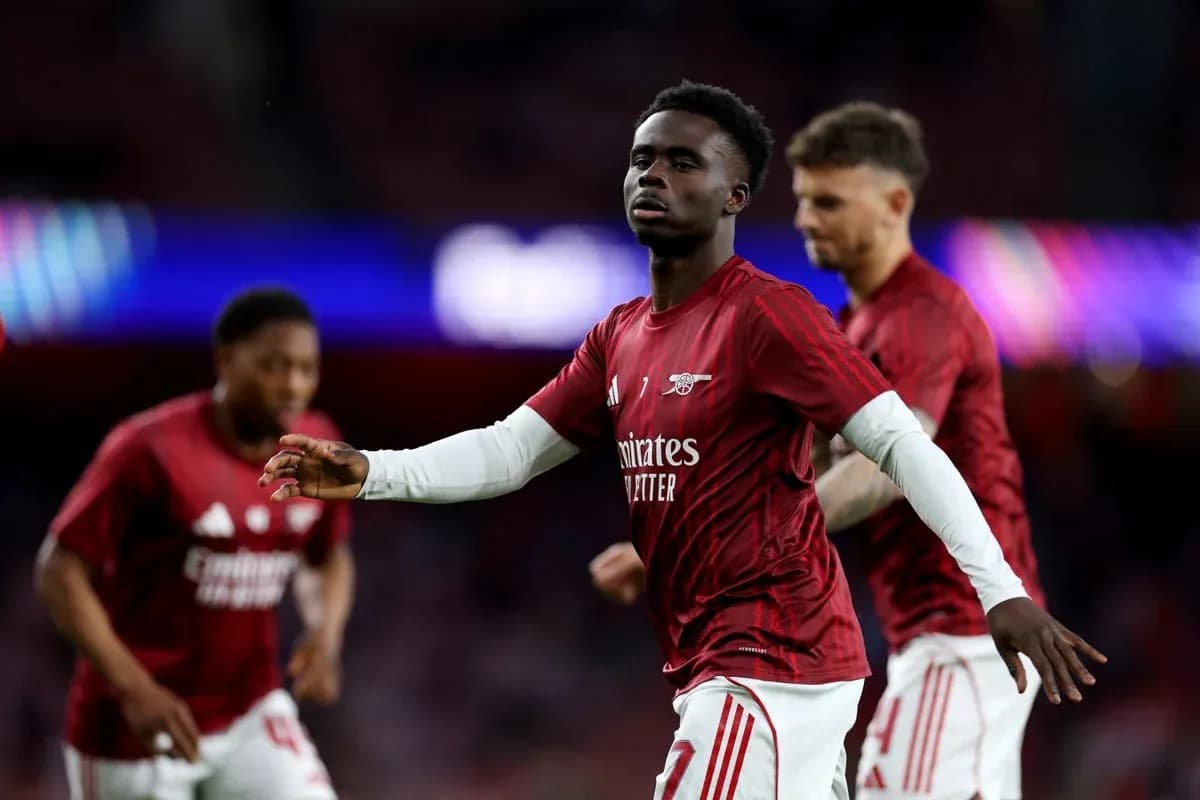
Arsenal start Bukayo Saka, the symbol of this new era, in a game that will test his nerve as much as his talent. Around him, Arteta leans on the players who have carried the club back to Europe’s elite this season, with the expectation that they will embrace the stage rather than shrink from it.
Atletico, meanwhile, arrive with a side built to suffocate and then strike. Jan Oblak anchors them in goal. In front of him, a defensive line of Ruggeri, Hancko, Pubill and Le Normand offers height, aggression and the kind of discipline Simeone demands.
Koke, Marcos Llorente and Giuliano form a hard-working midfield, the engine room that will try to disrupt Arsenal’s rhythm and slow the game to Atletico’s preferred tempo. Ahead of them, Antoine Griezmann, Alvarez and Lookman give the visitors a blend of craft, movement and direct running that can punish the slightest lapse.
Arsenal know the script. Atletico will sit in, spoil, contest every decision, and wait for that one break, that one mistake. The hosts will have more of the ball, more of the territory, and more of the responsibility.
The question is whether they can turn that into something definitive.
Beast mode or another scar?
Viktor Gyokeres captured the mood neatly when he called this “an amazing opportunity” and spoke of the privilege of playing this second leg at home. Arteta has echoed that theme all week. This is not a burden, he insists. It is a moment to be seized.
But the scars of past failures linger. Arsenal fans remember 2017/18, when Atletico knocked them out in the Europa League semi-final. They remember 2006, when the Champions League dream died in the final itself. They know how rare these chances are.
Tonight, the numbers tilt slightly in Arsenal’s favour. The form guide, the venue, the unbeaten run against Spanish sides, the shaky recent record of Atletico against English clubs – all of it points towards the Gunners.
History, though, refuses to choose a side. It reminds Arsenal that Atletico thrive in semi-finals, that they have made a habit of outlasting English opponents when the pressure peaks.
So it comes down to this: can Arteta’s team truly play like “beasts” on the biggest night of their careers, without losing their heads against the masters of disruption? The Emirates is about to find out.