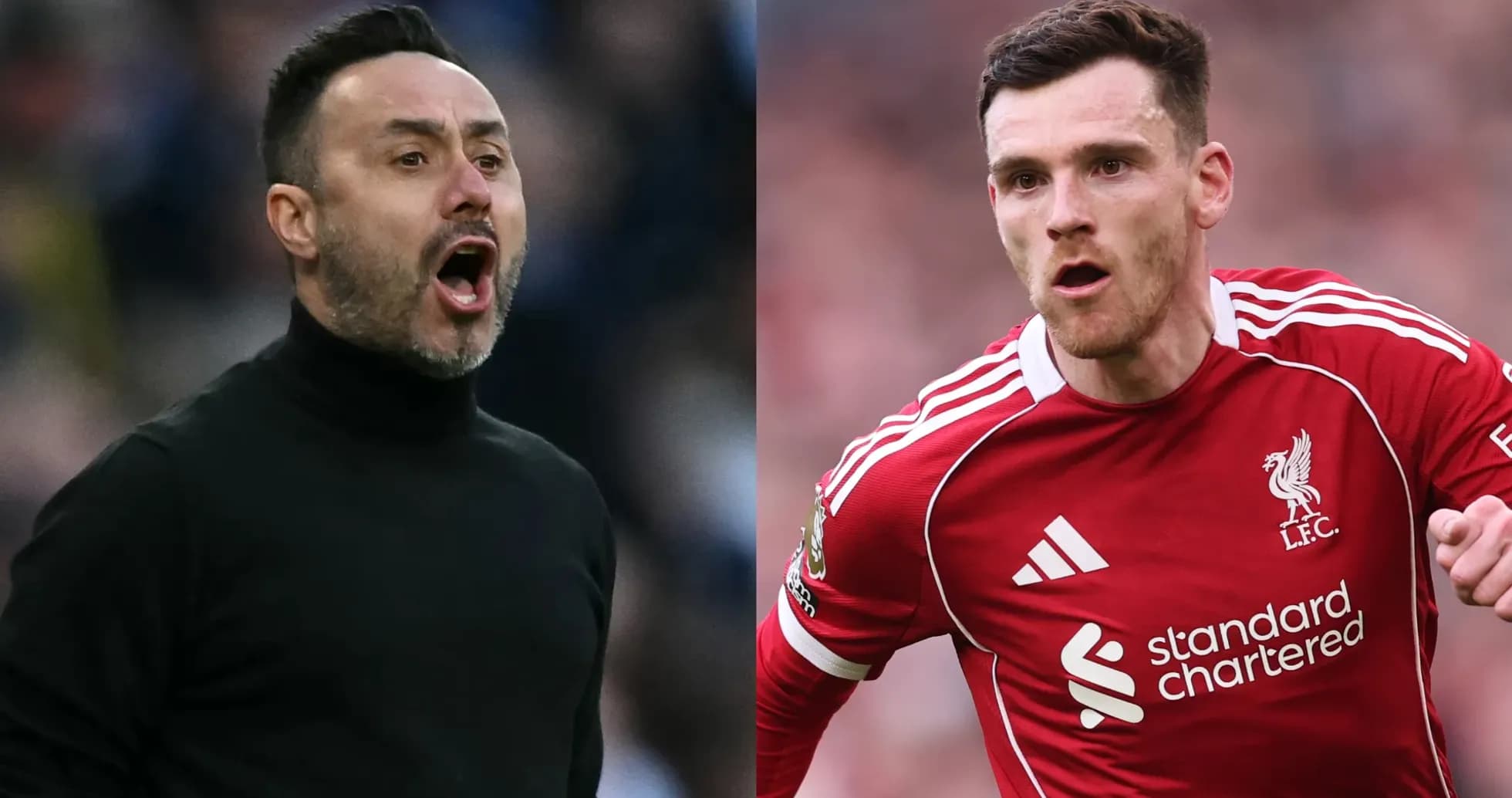
Andy Robertson: Tottenham's New Standard-Setter
The sight of Andy Robertson in anything other than red will take some getting used to. For the best part of a decade he has been the heartbeat of Liverpool’s left flank, a relentless presence in a side that stormed England, Europe and the world. Now, at 32, he arrives at Tottenham Hotspur not as a fading name cashing in on his reputation, but as a serial winner with plenty of running still in his legs and a point to prove in north London.
The making of a Liverpool great
Call him what he is: one of the finest left-backs the Premier League has seen. In Liverpool’s modern era, no one at his position comes close. In the club’s entire history, only Alan Kennedy – scorer of two European Cup-winning goals – can seriously enter the conversation.
The honours board is complete. Two Premier League titles. A UEFA Champions League. An FA Cup. Two League Cups. A FIFA Club World Cup. Robertson didn’t just witness that period; he drove it, game after game, season after season, almost ever-present in Jurgen Klopp’s high-octane machine.
Klopp’s football demanded full-backs who could play like wingers and defend like centre-backs. Robertson embraced that chaos. He hurtled up and down the touchline, aggressive with and without the ball, his style perfectly tuned to the German’s intensity.
Rival managers saw it up close. After Liverpool beat Manchester United 3-1 in December 2018, Jose Mourinho admitted he was exhausted just watching him, describing a player who seemed to sprint 100 metres “every minute”. It wasn’t hyperbole. It was the reality of facing a left-back who treated the touchline like a personal running track.
A running machine with a ruthless edge
The numbers back up the eye test. In 2020/21, Robertson covered 389.3km in the Premier League, the second-highest total by any full-back, just behind Luke Ayling. Over three straight seasons from 2019 to 2022, no full-back sprinted more. He didn’t just overlap; he overwhelmed.
That relentlessness reached its purest form in one 13-second burst that has entered Premier League folklore. Against Manchester City in January 2018, Robertson chased and harried Bernardo Silva, Kyle Walker, John Stones, Ederson and Nicolas Otamendi in one unbroken press, roaring across the pitch like a one-man wave. Anfield rose as if he had scored. In many ways, he had. That moment crystallised what he stood for: energy, courage, and an absolute refusal to let opponents breathe.
Yet Robertson is far more than a set of lungs and a good engine. His output with the ball is elite by any standard.
Since arriving from Hull City in 2017 for a reported £8 million, he has redefined what a left-back can contribute in the final third. Only two full-backs in Premier League history have delivered 10 or more assists in three separate seasons: Trent Alexander-Arnold and Robertson, who hit double figures in 2018/19, 2019/20 and 2021/22. For a defender, those are playmaker numbers.
Across that era, he sits top among Premier League left-backs for chances created, big chances fashioned, touches in the opposition box and successful passes into the final third. He has 56 league assists, more than any other left-back in the competition’s history. Only Lucas Digne has delivered more successful open-play crosses from that side.
Stack those metrics up and the debate becomes clear. Ashley Cole likely still edges the “greatest Premier League left-back” argument, but Robertson is not far behind. Very few can claim to have matched his blend of volume, quality and consistency at both ends of the pitch.
Why Spurs moved for him
So why Tottenham, and why now?
Spurs were hardly alone in circling once it became clear Robertson would be available on a free when his Liverpool contract expired. They had already tested the waters in January, only for the move to stall when Liverpool were unable to recall Kostas Tsimikas from his loan at Roma.
Roberto de Zerbi, newly installed in north London, pushed to revive the deal. Juventus were among the clubs linked, but Spurs won the race and have handed the 32-year-old a pivotal role in a squad that has lacked hardened winners and strong dressing-room figures.
On paper, left-back is not an obvious weakness. Destiny Udogie and Djed Spence are already in situ. On the pitch and in the dressing room, the picture is more nuanced. Spurs have finished 17th in consecutive seasons. Standards have slipped. Experience is thin. De Zerbi put it plainly after the signing: Robertson brings “experience, mentality and qualities” and is “a big player for us”.
That matters. Robertson is used to operating where mistakes are punished and trophies are expected. He understands the culture required to sustain success, not just taste it. For a Spurs side trying to drag itself out of mediocrity, that mindset is almost as valuable as his left foot.
Still more than just a name
This is not a nostalgia signing. Robertson’s body of work last season shows a player who can still influence games at Premier League level.
He started 11 league matches for Liverpool in 2025/26 and came off the bench 13 times, featuring 35 times across all competitions. He may not crash into the penalty area as frequently as he did in his mid-20s, but his heat map from the campaign just gone still glows deep red along the left flank. The intent to attack remains.
The data backs up the impression. Per 90 minutes in 2025/26, Robertson outperformed every Spurs defender for tackling, crossing productivity and chance creation. He averaged 5.07 passes into the box, with a tackle success rate of 75 per cent. Spence and Udogie lagged behind both in volume and efficiency.
His delivery remains sharp: 0.92 successful open-play crosses per 90, comfortably ahead of his new rivals on that side. He also created 1.54 chances per 90, almost double Spence and more than three times Udogie’s output. That sort of end product from deep and wide areas will appeal to De Zerbi, who wants his full-backs to be technically secure, brave in possession and aggressive in their positioning.
Given those numbers, it is easy to see Robertson establishing himself quickly as a regular starter, especially in a side that craves control and incision from wide areas.
Leadership, standards and what comes next
Robertson will also arrive with one eye on the international stage. He is set to captain Scotland at the FIFA World Cup 2026, and that looming tournament ensures his motivation remains fierce. A player who still has to lead his country on the biggest stage is unlikely to cruise through the final years of his club career.
At Spurs, he will be asked to do more than overlap and cross. He will be a reference point. Younger players will watch how he trains, how he reacts to setbacks, how he demands more from those around him. For a club trying to reset its culture after two grim campaigns, that influence is hard to quantify but impossible to ignore.
No, he is not at his absolute peak anymore. The blistering, every-minute sprinting of his mid-20s has inevitably eased. What remains, though, is a defender with a refined understanding of the game, a left foot that still shapes matches, and a personality built for the pressure of lifting a club back towards the top.
Tottenham are not just signing a left-back. They are importing a standard. The question now is simple: can Robertson’s winning habits drag Spurs up to his level, or will the club’s recent struggles pull him down to theirs?