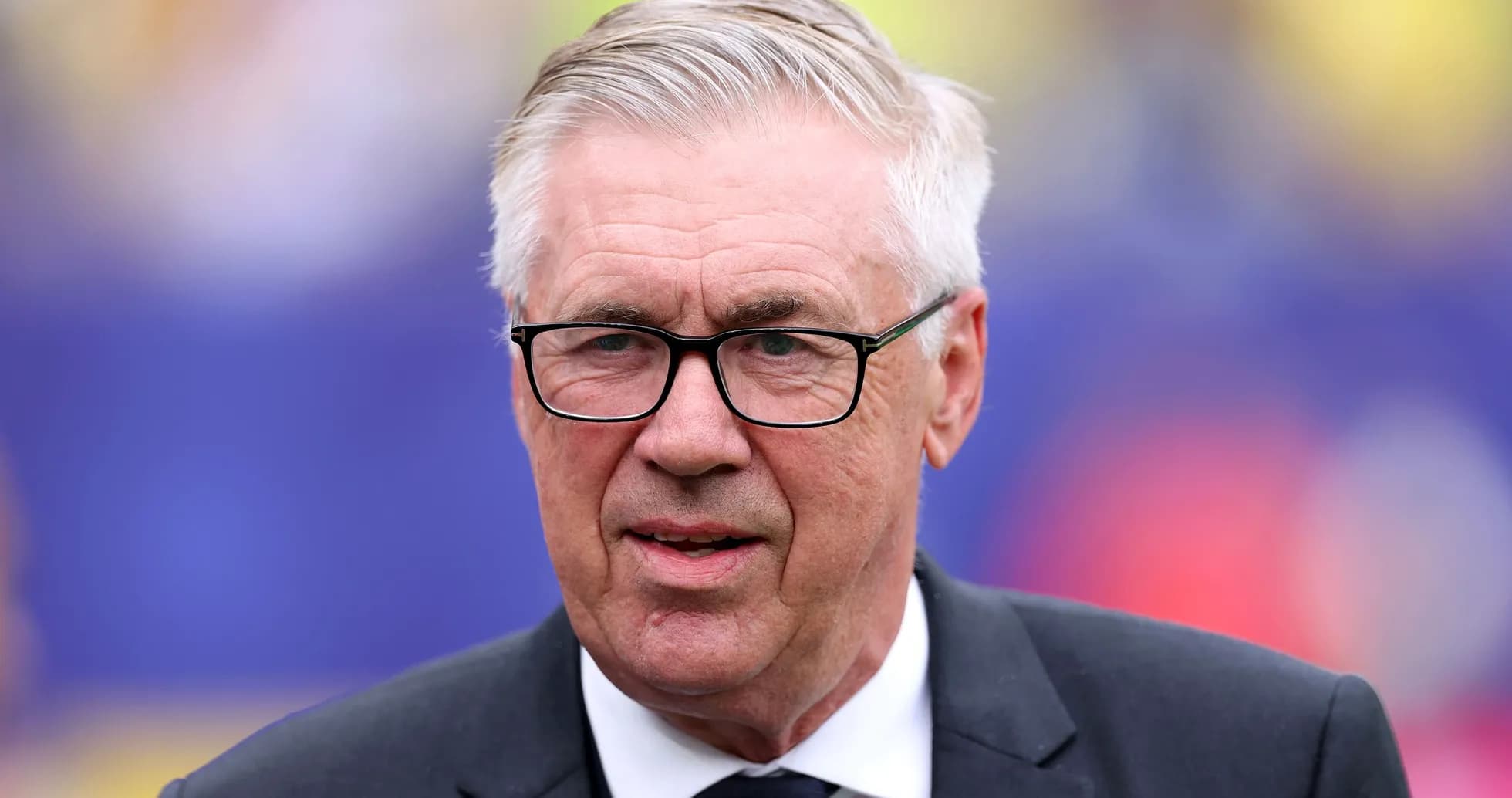
Carlo Ancelotti Reboots Brazil National Team Ahead of 2030 World Cup
Carlo Ancelotti has ripped up the old script and started again with Brazil.
Shaken by a miserable World Cup and a shock round-of-16 exit to Norway, the Italian has responded not with tweaks, but with a full-scale reboot of the Selecao. The latest squad for friendlies against Australia and India makes that brutally clear.
Big names out, new era in
Alisson is out.
Casemiro is out.
Fabinho is out.
Neymar, now retired from international duty, is absent too.
For years, those names formed the spine of Brazil. Now they are watching a new project begin from the outside.
Ancelotti has gone young. Very young. He has deliberately targeted players eligible for the 2028 Olympic Games, using those age limits as a blueprint for building a core aimed squarely at the 2030 World Cup.
The decision stems directly from the scars of the last tournament.
“The World Cup was a disappointment for us and for me personally,” Ancelotti admitted, speaking to ESPN. “The pain of the defeat lingers much longer. Now, however, we are motivated by the fact that we have time to prepare for a new cycle and get ready for the upcoming competitions.”
This is that new cycle, laid bare on a squad list.
Alisson axed – for now
No call-up for Liverpool’s Alisson is the headline shock, but Ancelotti was keen to stress this is not a permanent divorce.
He has completely reshaped his goalkeeping group, handing places to Hugo Souza, Pedro Morisco and Otavio. The message is clear: this window belongs to the next generation.
“We know Alisson very well, and when the competitions, like the Copa America, come, if he remains being the best goalkeeper in Brazil, Alisson will play,” Ancelotti said. “Right now, however, we have to prioritise the younger ones.”
It is ruthless. It is also logical within the manager’s new timeline. With no trophy on the line in these games, Ancelotti is spending his credit on development, not sentiment.
Youth with a hard edge of experience
This is not a kids-only experiment, though. Ancelotti has kept a hardened core to guide the transition.
Vinicius Junior stays and will be the face of the attack. Raphinha is in to stretch defences on the opposite flank. Chelsea forward Joao Pedro returns after missing the World Cup, a chance to finally carve out his place at international level.
At the back, Paris Saint-Germain captain Marquinhos remains the defensive reference point. In midfield, new Arsenal signing Bruno Guimaraes will carry both the ball and the responsibility.
“I chose these players to help with this change in direction,” Ancelotti explained. “They are crucial for the future and will help the younger players improve. One thing is certain: a player who is 34 or 35 years old isn’t the future; they are the present. If a player of that age is ready to play in a major tournament, they will be in the national squad.”
That line says everything about his approach. Nobody is being written off purely because of age, but nobody will be protected from competition either.
Endrick, Estevao and the Olympic blueprint
Look deeper into the list and the strategy comes into sharp focus.
Endrick, already tipped as Brazil’s next great No. 9, is there. So is Estevao, another precocious attacking talent. Rayan and Samuel Lino join a forward group built to run, press and grow together over multiple cycles.
In midfield, Andrey Santos, Danilo Santos, Douglas Luiz, Breno Bidon and Gabriel Bontempo give Ancelotti a mix of profiles, but all with years ahead of them at the top level. At the back, Arthur Dias, Wesley, Gabriel Magalhaes, Douglas Santos, Jair, Matheuzinho, Maurio Junior and Vitor Reis round out a defensive unit that looks designed as much for 2028 and 2030 as for next month.
This is not a short-term squad. It is a roadmap.
Australia, then history in India
The first test of this rebuilt Brazil comes in Australia, where the Selecao will play a double-header of friendlies against the Socceroos. They meet in Townsville on September 25, then again in Brisbane four days later.
Those games will offer early clues: how quickly this young group can adapt, how Vinicius and Raphinha shoulder leadership, how the new goalkeepers cope under the shirt’s weight.
Then comes something different altogether.
On October 3, Brazil will step out in Kolkata for their first ever match in India. For a country that has worshipped Brazilian football from afar for generations, it is a landmark moment. The five-time world champions will finally play in front of millions of fans who have only ever seen them through screens and posters.
It is a fitting backdrop for a team trying to reinvent itself in public.
Brazil squad in full
Goalkeepers: Hugo Souza, Pedro Morisco, Otavio
Defenders: Arthur Dias, Wesley, Marquinhos, Gabriel Magalhaes, Douglas Santos, Jair, Matheuzinho, Maurio Junior, Vitor Reis
Midfielders: Bruno Guimaraes, Andrey Santos, Danilo Santos, Dougals Luiz, Breno Bidon, Gabriel Bontempo
Forwards: Endrick, Joao Pedro, Estevao, Pedro, Raphinha, Rayan, Samuel Lino, Vinicius Junior
The message from Ancelotti is unmistakable: the next Brazil will be built now, not later. The only question is which of these youngsters will still be standing when the 2030 World Cup finally arrives.