Alisson's Future: Liverpool's Tough Decision Ahead
For six years, Liverpool have slept soundly knowing the last line was Alisson.
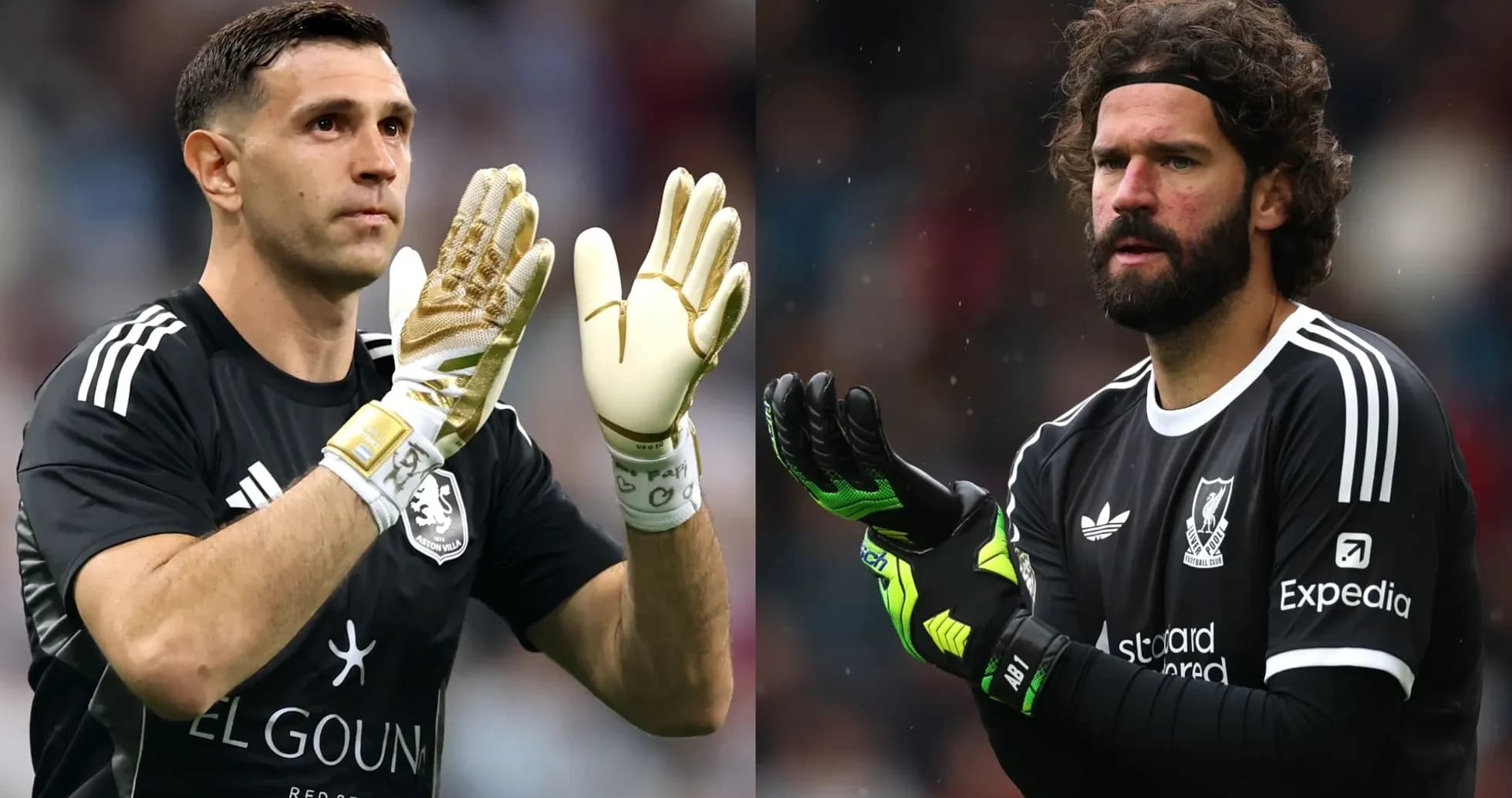
Since arriving from Roma in 2018, the Brazilian has been more than a goalkeeper. He has been the corrective to a decade-long flaw, the calm at the back of a side built on chaos and intensity. With him, Liverpool’s puzzle finally snapped into place: Champions League, Premier League, FA Cup, League Cup. All with the same No. 1 behind it, compiling 333 appearances and a catalogue of defining moments.
Now the clock is ticking.
Alisson is 33, with only 12 months left on his contract. That simple detail changes everything. It invites questions that Liverpool have been able to ignore for years. It also invites suitors, and the noise around interest from top Italian clubs is growing louder by the week.
Selling him this summer would be a brutal football decision, but also a business one. Lose him for nothing in a year, or cash in while there is still a fee on the table. On paper, it is the kind of call elite clubs have to make. On grass, it is something else entirely.
Harder to replace than Salah?
The scale of the dilemma is captured by a man who knows both the club and the position. Former Liverpool goalkeeper Brad Friedel, speaking to GOAL in association with MrQ, did not hesitate when asked just how big a hole Alisson would leave.
From Arne Slot’s point of view, he even suggested the Brazilian’s exit could cut deeper than the departure of Mohamed Salah, the 257-goal “Egyptian King”.
“From Arne Slot’s perspective, possibly, because I don’t think Arne Slot and Salah were seeing eye to eye. That was starting to become a little bit like oil and water,” Friedel said, before stressing the scale of Salah’s legacy over the last decade and the size of that loss.
But when the conversation turned to Alisson, the tone hardened.
“Alisson would be one of the hardest goalkeepers to replace in global football if he were to go. I think it’d be very difficult for Liverpool to replace him.”
This is not just nostalgia talking. Alisson has given Liverpool more than saves. He has given them certainty. A goalkeeper who commands his box, dominates one-on-ones, owns big moments and never drags the club into scandal. When he has erred, he has admitted it. Those errors have been rare.
Friedel did not hide his own feelings.
“I would hate to see him go, professionally speaking, and as a Liverpool supporter, I would be particularly devastated if he left because of how good he’s been for the club. He never brought the club into disrepute. Held his hand up if he made a mistake, which was not many mistakes. He is one of the best 1v1 goalkeepers that has ever played the game.
“I think those types of goalkeepers, even as they decline in their age, even with maybe a couple of injuries, are still better than almost everyone in the world. I think that replacing him would be tough, really tough.”
That is the crux. Even a slightly diminished Alisson still profiles as better than most of the market. Letting that go is not just replacing a player; it is replacing a standard.
Who could possibly follow him?
If Liverpool do step into that void, the next question is obvious: who on earth comes next?
Names will swirl as the window opens. One of them is James Trafford, the 23-year-old England international whose pathway at Manchester City is blocked by Gianluigi Donnarumma. Young, talented, homegrown – on the surface, he ticks a lot of modern recruitment boxes.
Friedel, though, sounded a warning about the scale of the job.
“Possibly,” he said when Trafford was put to him, “but you need someone with a skin of leather, you need someone who’s going to be able to play in all the big matches. You need someone who expects to win the Champions League, not just play in it. Expects to win the Champions League, win the Premier League, win the FA Cup, and win the League Cup. It’s a different type of mentality that you need when you’re a goalkeeper at these top clubs.”
That word – expects – matters. At Liverpool, a goalkeeper is not simply trying to survive. He is expected to set the tone, to live with scrutiny, to wear the pressure of a global institution every three days.
“And it’s not easy to find, you know, and Trafford’s a really good goalkeeper. I like him a lot, but that’s also a lot to load onto him.”
So Friedel’s mind drifted toward a different profile. Proven. Battle-hardened. Someone who has lived in the storm and stayed upright.
“Maybe the likes of an Emi Martínez, someone like that, that can take all the games all the time, any criticism, any plaudits, and they know how to deal with it. There aren’t many out there that you can just pinpoint and say: ‘He’s our guy’. That’s a hard decision.”
It is a stark assessment. There is no obvious heir. No simple succession plan. No neat, data-led answer that replicates Alisson’s presence, personality and performance in one package.
And that is why Liverpool’s next move around their No. 1 will say as much about the new era under Arne Slot as any signing he makes. Do they gamble on the future, or double down on the certainty they already have?
At some point soon, someone at Anfield will have to decide how much a sense of security is really worth.