Alaves Triumphs 1-0 Against Barcelona: A Tactical Analysis
Alaves’ 1-0 win over Barcelona at Estadio Mendizorrotza was a pure control-versus-containment battle, decided by a single, perfectly timed transition and then 45 minutes of disciplined suffering without the ball. In a La Liga match where Barcelona had 77% possession and 676 passes, Quique Sanchez Flores’ side accepted territorial inferiority, trusted their 5-3-2 block, and maximized the few attacking sequences they could construct. Hansi Flick’s Barcelona, by contrast, circulated the ball with their usual technical security but failed to convert sterile dominance into real penalty-box threat, finishing without a single shot on target and unable to break Alaves’ low block once they were forced to chase the game.
I. Executive Summary
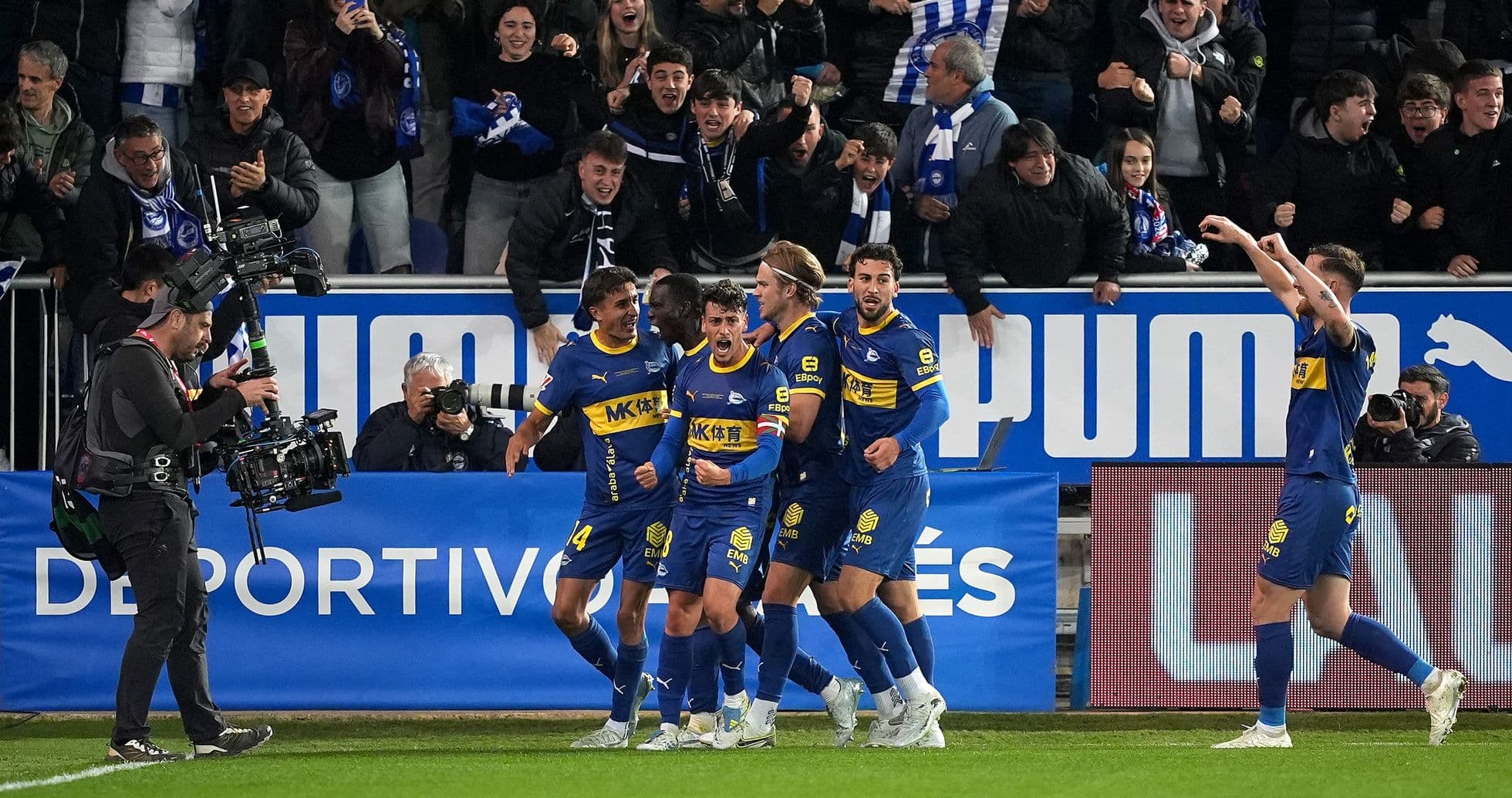
The decisive moment arrived on the stroke of half-time. At 45', I. Diabate finished the game’s only goal for Alaves, assisted by A. Blanco, establishing a 1-0 lead that would hold through a second half increasingly tilted towards Barcelona’s possession but not their productivity. The hosts went into the break 1-0 up and then shifted further into survival mode, protecting central zones and defending the width with their back five. Barcelona’s adjustments and substitutions increased their control but not their incision, as Alaves’ compactness and penalty-box protection remained intact. The result crystallized a tactical contrast: Alaves’ defensive realism against Barcelona’s unthreatening control.
II. Scoring Sequence & Disciplinary Log
Scoring sequence (verified against final score 1-0):
- 45' I. Diabate (Alaves) — assisted by A. Blanco. A rare, well-constructed Alaves attack punished Barcelona just before the interval, with Blanco supplying the decisive pass for Diabate to convert from inside the box. This strike set the half-time score at Alaves 1-0 Barcelona and forced Barcelona to chase against an entrenched block after the break.
Card log (chronological, with exact reasons and totals):
- 46' Marcus Rashford (Barcelona) — Foul
- 81' Abderrahman Rebbach (Alaves) — Persistent fouling
- 89' João Cancelo (Barcelona) — Foul
Totals: Alaves: 1, Barcelona: 2, Total: 3.
The early second-half booking for Marcus Rashford immediately after the restart underlined Barcelona’s urgency and occasional overreach in counter-pressing. Abderrahman Rebbach’s yellow for Persistent fouling reflected the cumulative nature of Alaves’ defensive work on their left flank as they repeatedly disrupted Barcelona’s wide combinations. João Cancelo’s late caution for Foul came as Barcelona pushed in desperation, leaving him exposed in defensive transition and forced into a card-worthy intervention.
III. Tactical Breakdown & Personnel
Alaves lined up in a 5-3-2 under Quique Sanchez Flores, with A. Sivera in goal behind a back five of A. Rebbach, V. Parada, V. Koski, N. Tenaglia and A. Perez. In midfield, D. Suarez, A. Blanco and J. Guridi formed a narrow trio tasked with screening the central lanes, while T. Martinez and I. Diabate led the line. The shape was unmistakably reactive: deep line, compressed vertical distances, and a heavy emphasis on blocking central progression and contesting second balls.
Statistically, Alaves’ approach was clear. They had just 23% possession and completed 112 of 190 passes (190 passes, 112 accurate, 59%). Yet within that minimal volume, they generated 9 total shots, with 7 inside the box and 3 on target, for an xG of 0.66. The shot profile shows a team that rarely entered the final third, but when they did, they arrived in good positions and committed numbers. The winning goal was emblematic: a quick, vertical action exploiting the momentary disorganization of Barcelona’s rest defense, with A. Blanco stepping out of the low block to connect play and Diabate attacking the space behind.
Defensively, Alaves’ back five functioned as a sliding unit. The wing-backs, particularly Abderrahman Rebbach on the left, were aggressive in stepping out to wide midfielders and full-backs, accepting fouls and risk to prevent clean deliveries. His yellow for Persistent fouling at 81' was the logical end of a game-long duel on that flank. The three central defenders protected the box superbly, explaining why Barcelona’s 8 total shots produced zero on target: they were either forced outside the box (4 shots from range) or into heavily contested, blocked efforts (3 blocked shots).
Interestingly, A. Sivera did not record a single official save (0 Goalkeeper Saves) despite Barcelona’s territorial dominance. That reflects the quality of the block in front of him rather than a quiet defensive night; the defenders’ interventions meant that Sivera’s 0.12 goals prevented were more about positioning and command than shot-stopping volume. Alaves’ 14 fouls and single yellow card show controlled aggression: many tactical interruptions, but only one player crossing the threshold of Persistent fouling.
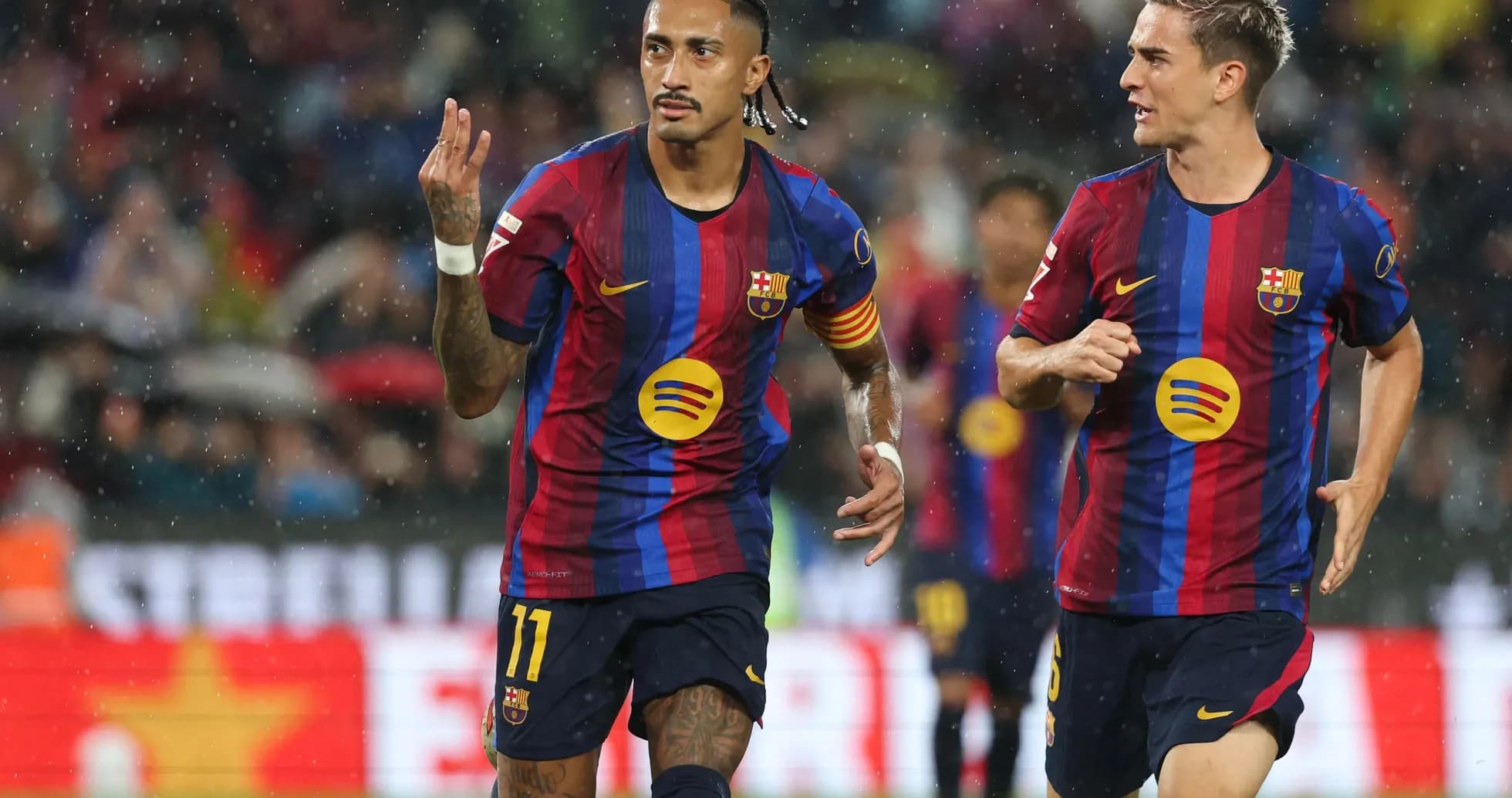
Barcelona, under Hansi Flick, deployed a 4-2-3-1 with W. Szczesny in goal, a back four of A. Balde, A. Cortes, P. Cubarsi and J. Kounde, a double pivot of M. Bernal and M. Casado, and an advanced line of R. Bardghji, D. Olmo and Marcus Rashford behind R. Lewandowski. On the ball, the structure often resembled a 2-3-5, with one full-back tucking in and the other advancing, but the key pattern was sterile circulation in front of Alaves’ block.
Barcelona’s numbers highlight the paradox of their performance: 77% possession, 676 passes with 605 accurate (676 passes, 605 accurate, 89%), but just 8 shots, 4 from outside the box, and none on target, for an xG of 0.59. Their passing accuracy and volume were elite, but the lack of verticality and penetration into the half-spaces allowed Alaves to remain compact. Many attacks stalled in front of the Alaves midfield three, forcing horizontal recycling rather than incisive passes between the lines.
The early second-half yellow for Marcus Rashford (46', Foul) came as Barcelona tried to immediately counter-press after losing the ball, hinting at Flick’s desire to lock Alaves in. However, Alaves’ willingness to go long from deep and accept second-ball chaos limited Barcelona’s ability to trap them in sustained pressure zones. Later, João Cancelo’s introduction and subsequent booking at 89' for Foul reflected Barcelona’s late-game gamble: full-backs pushed extremely high, leaving more space to defend in transition and forcing Cancelo into a card-worthy intervention.
W. Szczesny, unlike Sivera, was moderately involved, registering 3 saves and 0.12 goals prevented. That indicates that while Alaves rarely attacked, when they did, they produced chances of similar cumulative quality to Barcelona’s, despite far fewer possessions. Barcelona’s defensive structure in open play was largely sound, but the single lapse before half-time was punished clinically, and with no margin for error in attack, that moment decided the match.
IV. The Statistical Verdict
From a statistical perspective, this was a classic upset profile driven by game state and structural discipline. Barcelona’s 77% possession and 676 passes to Alaves’ 190 suggest overwhelming control, but the xG balance — 0.66 for Alaves versus 0.59 for Barcelona — reveals that the hosts actually created the slightly better quality chances per shot. Barcelona’s 0 shots on target and 3 blocked attempts underline how effectively Alaves protected their box, while Alaves’ 7 shots inside the area from only 9 total attempts show a ruthlessly selective approach.
In terms of overall form indicators, Barcelona’s high passing accuracy and low foul count (8 fouls, 2 yellow cards for Foul) align with a technically dominant but risk-averse side. Alaves’ 14 fouls and single yellow for Persistent fouling are consistent with a team whose Defensive Index is built on compactness, physical duels and tactical disruption. The card totals — Alaves: 1, Barcelona: 2, Total: 3 — reflect that imbalance without suggesting loss of control.
Ultimately, the numbers confirm the tactical story: Alaves traded possession for territory and box protection, executed their lone high-quality transition at 45', and then trusted their 5-3-2 to suffocate Barcelona’s 4-2-3-1. Barcelona’s inability to convert control into shots on target made that single Diabate strike, assisted by Blanco, sufficient to tilt both the scoreboard and the statistical verdict in Alaves’ favor.