Africa's Final Without a Champion: Senegal's Fury and CAF's Crisis
By the time the players walked out in Rabat, the damage had already been done.
According to Spanish newspaper AS, the storm that has left Africa without a champion for 77 days did not begin with a disallowed goal or a disputed penalty. It started the moment Senegal set foot in Morocco and felt, almost instantly, that the deck was being stacked against them.
From Luxury to “Unlisted” Lodgings
The “Lions of Teranga” arrived expecting top-tier conditions for a continental final. Instead, they were uprooted.
Initially placed in a luxury hotel in Tangier, the Senegalese delegation were then moved to the Al-Rihab complex — accommodation that, crucially, did not appear on CAF’s official list of approved hotels. For a team chasing a trophy, it felt like a red flag.
Senegal filed an official protest. CAF responded with a compromise: a transfer to the Amfitrit Hotel on the outskirts of Rabat. On paper, it was an upgrade. In reality, it did little to calm a camp that already believed the playing field was tilting.
The sense of grievance deepened.
Training on “Enemy” Ground
Next came the training issue.
Senegal were allocated the Mohammed VI Sports Complex for their sessions — the very same facility used by the Moroccan national team as their base. For the visitors, this wasn’t just a logistical detail. It was a question of trust and competitive integrity.
Within the Senegalese camp, voices grew louder. They saw a breach of the principle of equal opportunity. They worried that their sessions could be monitored, that tactical plans might leak, that privacy had been sacrificed in a match of enormous stakes.
Those suspicions didn’t fade. They hardened.
Tickets, Security, and a Boiling Point
By the time the team reached Rabat, the problems were no longer confined to hotels and training grounds.
Senegal complained of poor organisation on arrival, pointing to security and ticketing chaos. The distribution of tickets became another flashpoint, with the Senegalese side denouncing what they called an “unfair distribution” of seats for the final.
Hours before kick-off, Senegal took the unusual step of going public. They warned of “irregularities” surrounding the showpiece game. The final had not yet started, but the atmosphere was already poisoned.
Then came the night at Moulay Abdallah Stadium.
Chaos Under the Floodlights
The final descended into disorder.
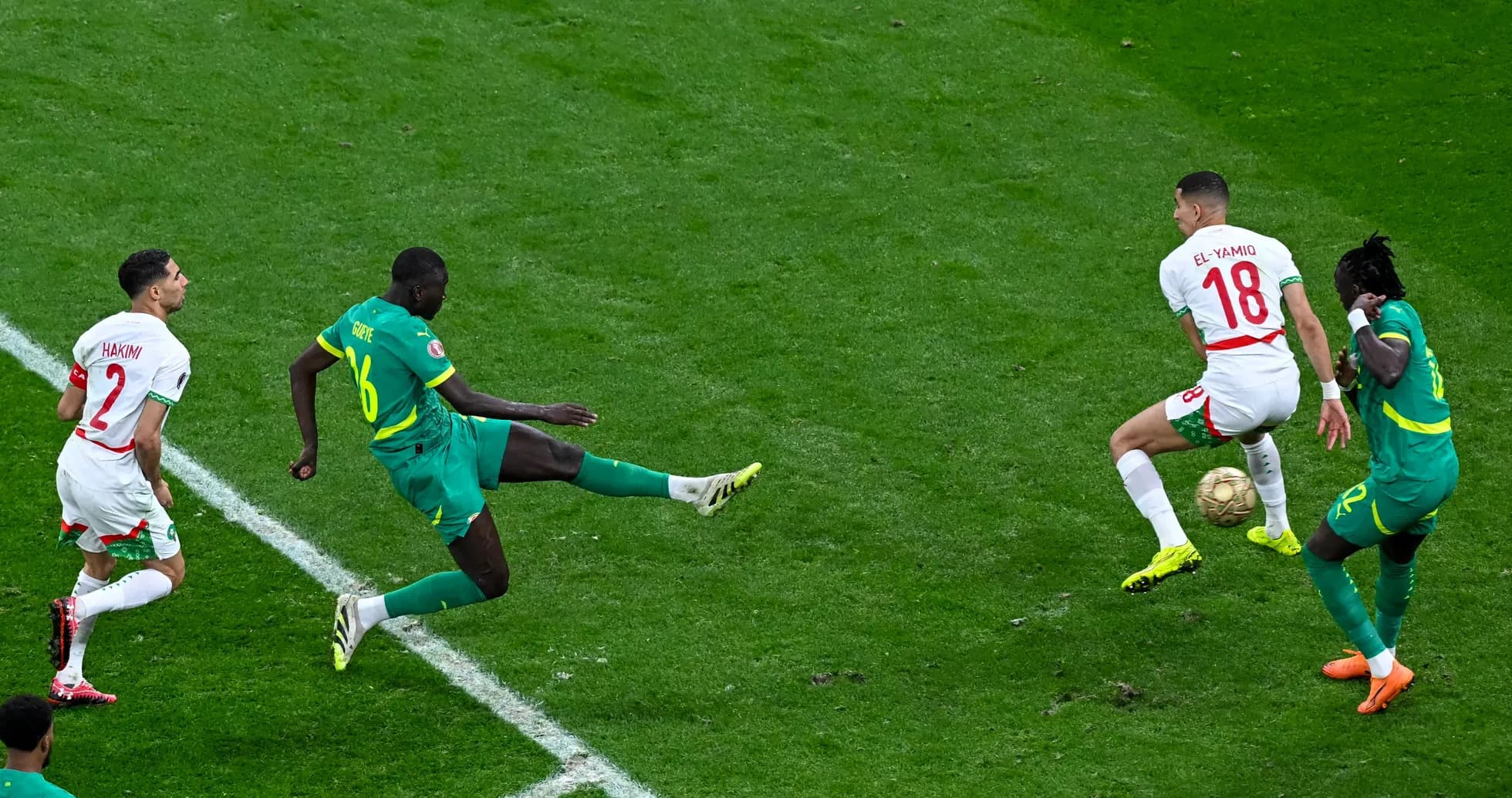
A controversial Senegalese goal was ruled out. Soon after, Morocco were awarded a penalty that triggered furious protests from the Senegalese players and staff. The temperature on the pitch soared.
The pressure finally exploded when the Senegal squad walked off en masse, abandoning the field in protest at what they described as “blatant refereeing injustice”. For a few extraordinary moments, the final seemed lost to chaos.
When play resumed, the drama intensified. Morocco’s Ibrahim Diaz attempted a bold, Panenka-style penalty. It failed. The miss swung the momentum back to Senegal.
They held their nerve, kept a clean sheet, and went on to win in extra time on the pitch.
But the real battle was only just beginning.
A Victory on Grass, a Defeat on Paper
Morocco viewed the walkout very differently.
From their perspective, Senegal’s mass departure from the field amounted to an official withdrawal. Under that interpretation, the result should be a 3-0 win for Morocco by default.
CAF sided with that view in its initial decision, recording a 3-0 defeat for Senegal. The governing body effectively erased what had happened in extra time.
Senegal refused to accept it. They took the case to the Court of Arbitration for Sport (CAS). After the appeal, CAS overturned CAF’s original ruling, plunging the competition into limbo.
The continent now had a final. It had a scoreline. It had two opposing versions of justice. It did not have a champion.
“Institutional Instructions” and a New Scandal
As if the situation were not combustible enough, AS then revealed what it described as explosive details from a CAF Executive Committee meeting in Dar es Salaam on 13 February.
During that meeting, the head of the Referees’ Committee, Olivier Safary, admitted that the referee in the final had received “institutional instructions” not to send off Senegalese players during the suspension of the match, in order to make sure the game continued.
The words cut straight to the heart of football’s credibility.
According to the report, that admission triggered uproar inside CAF and fuelled accusations of direct interference in refereeing decisions. The idea that a referee might be guided by anything other than the Laws of the Game struck at the organisation’s already fragile authority.
CAF suddenly found itself not just managing a dispute between two federations, but fighting for its own legitimacy.
A “Disastrous” Day in Court
The controversy did not stop at the touchline or the committee room.
At a press conference in Paris on 26 March, lawyers for the Senegalese Football Federation tore into the appeal hearing before CAS. They called it “disastrous” and claimed the judge appeared to have made up his mind before proceedings even began.
Senegal also attacked what it saw as a glaring conflict of interest inside CAF’s own Appeals Committee. The focus fell on lawyer Moez Nasri, who was involved in the committee while also serving as president of the Tunisian Football Federation.
For Senegal, that dual role was unacceptable — “a clear conflict between his role as a judge and that of a party to the competition”. The criticism went beyond national lines. Even CAF President Patrice Motsepe, according to the account, expressed surprise at Nasri’s presence on the committee.
Every new revelation chipped away at the institution’s image of neutrality.
Africa Waits
And so, 77 days after the final whistle, African football stands in a strange void.
Senegal insist they won the title where it should be won: on the pitch, in extra time, with a clean sheet and the resilience of champions. Morocco remain adamant that the law is on their side, that Senegal’s walkout constitutes a withdrawal, and that the trophy is theirs by regulation.
CAF, caught between two entrenched positions, faces accusations from both camps: “mismanagement”, “lack of transparency”, and a failure to protect the integrity of its own showpiece event.
The continent’s biggest stage has produced everything — drama, controversy, politics, legal warfare — except the one thing a final is supposed to deliver.
A champion.